
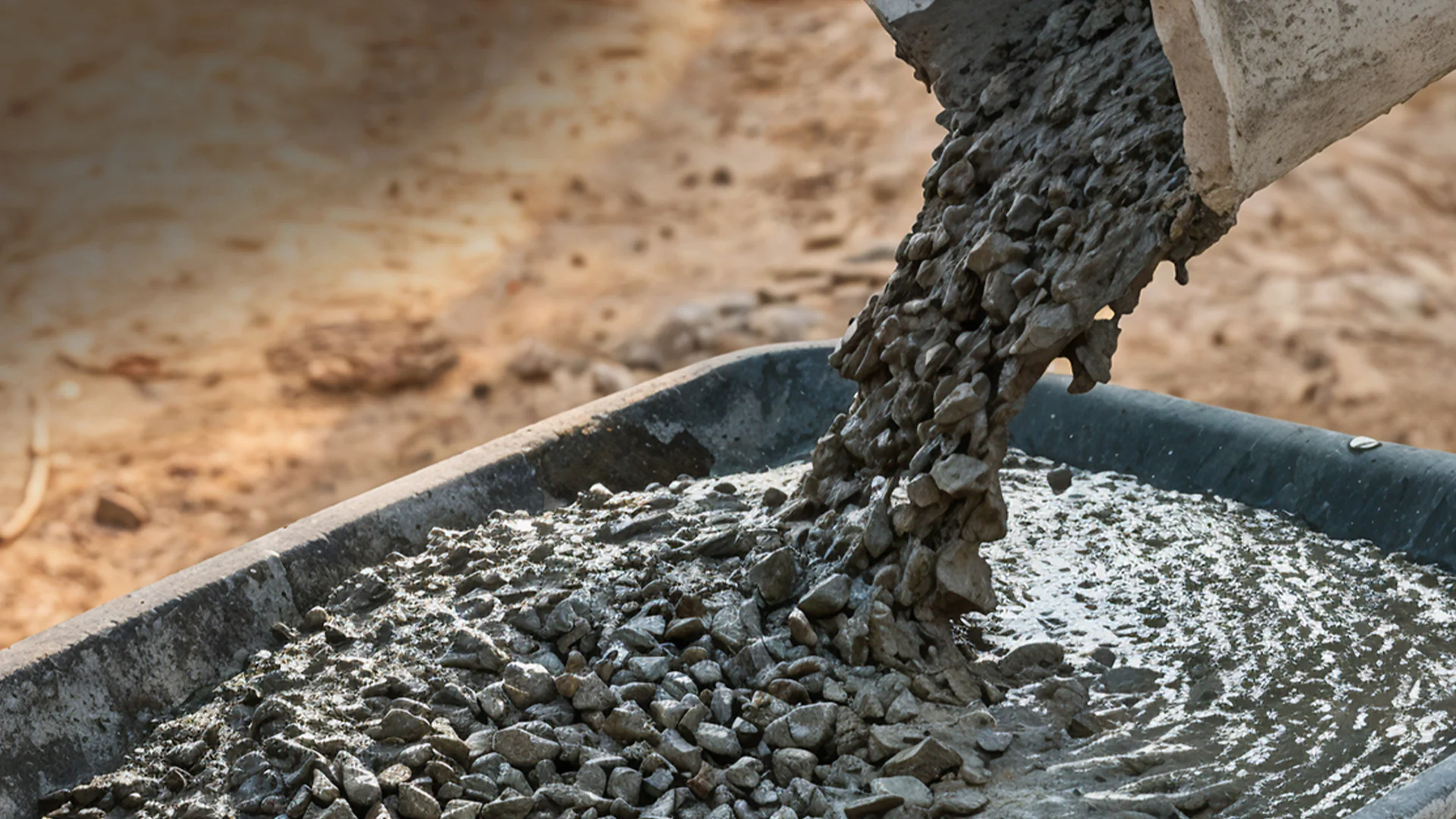
MPa stands for megapascal — the unit used to measure the compressive strength of concrete. When you order 25 MPa concrete, you’re specifying a mix designed to withstand 25 megapascals of compressive force at 28 days, verified by cylinder testing under AS 1012.9. In Australia, the grade you choose — 20 MPa for paths and lean fill, 25 MPa for residential driveways and footings, 32 MPa for structural slabs and commercial work, 40 MPa and above for engineered elements — determines the load capacity, durability and service life of the finished pour. Matching MPa to the application isn’t optional. It’s structural.
What MPa actually measures
A megapascal is one million pascals, or roughly 145 psi. In concrete specifications, the MPa value is the *characteristic compressive strength*: the minimum strength the mix is designed to reach at 28 days of curing,
confirmed by crushing standard cylinder samples in a calibrated press.
That single number reflects the entire mix design behind it water-cement ratio, cement type and content, aggregate grading, admixtures, and curing regime. A lower water-cement ratio almost always produces a higher MPa, with denser, less permeable concrete that resists carbonation, chloride ingress and freeze-thaw damage over time.
MPa does not measure tensile strength, flexural strength, or impact resistance. Those are separate properties tested under different parts of AS 1012. Compressive strength remains the headline number because it correlates closely with most other performance characteristics of cured concrete.
| Grade | Typical Slump | Common Application |
| 20 MP | 80 mm | Lean mix, blinding, garden paths, post-hole fill |
| 25 MPa | 80 mm | Residential driveways, footings, footpaths, house slabs |
| 32 MPa | 80 mm | Structural slabs, commercial driveways, retaining walls, reinforced columns |
| 40 MPa | 80 mm | High-traffic industrial floors, marine and coastal exposure, engineered structures |
| 50 MPa+ | Varies | High-rise columns, bridges, prestressed beams, aggressive chemical exposure |
20 MPa concrete (lean mix)
The lowest standard grade, sometimes called “lean mix concrete”. Specified where load is incidental: garden paths, mass fill under footings, post-hole concrete, and blinding layers beneath structural slabs. Not suitable for any element carrying structural load or reinforcement.
25 MPa concrete
The default residential grade across most of Australia. Used for standard driveways, footings, footpaths, garden edging, and house slabs in benign exposure classes (A1, A2 under AS 3600). Meets the minimum strength requirement for most domestic applications without engineered loading.
32 MPa concrete
The structural workhorse. Specified for suspended slabs, commercial driveways under heavier vehicle loading, reinforced columns and beams, retaining walls, and structural footings. Many engineers default to 32 MPa
as the minimum wherever reinforcement is involved, because the denser matrix provides better protection against rebar corrosion.
40 MPa and above (high-strength concrete)
Engineered grades for demanding service. Coastal and marine projects (exposure classes B2, C1, C2), high-traffic warehouse floors, prestressed beams, and any structure where a 50–100 year design life is critical. Almost always paired with supplementary cementitious materials fly ash, ground granulated slag, or silica fume and a tight water-cement ratio.
How concrete strength is tested
Under AS 1012.9, compressive strength is verified by casting cylinder samples from the delivered batch (100mm × 200mm or 150mm × 300mm), curing them under controlled conditions, and crushing them in a calibrated press at 7 and 28 days.
The 28-day result is reported against the specified MPa. Slump testing under AS 1012.3 runs at delivery, before the pour, to confirm consistency. If a project requires *early strength concrete* for fast-track construction or early formwork stripping, additional break tests at 3 or 5 days confirm strength development on schedule.
Concrete continues to gain strength slowly beyond 28 days, but specification, contract acceptance and structural calculations are all based on the 28-day figure. No exceptions.
Choosing the right grade for your project
Three factors decide the MPa specification: –
– Structural load. Pedestrian foot traffic, vehicle weight, machinery loading, or engineered structural action.
– Exposure class under AS 3600. A1 sheltered interior, A2 interior with moisture, B1 mild external, B2 near-coastal, C1/C2 marine and aggressive chemical zones.
– Reinforcement and cover. Heavier reinforcement and tighter cover requirements generally need higher MPa to protect the embedded steel from carbonation and chloride attack. Specifying below the engineer’s requirement compromises durability and may breach the National Construction Code.
Specifying well above the requirement adds cost without proportionate benefit, and in thick pours can introduce thermal cracking from excess hydration heat. If your engineer has called for 32 MPa, order 32 MPa.
Frequently asked questions
Is higher MPa always better?
No. Higher strength costs more, generates more hydration heat, and is unnecessary if the application doesn’t demand it. Match the grade to the load and exposure class not to a “safer is better” assumption.
What’s the difference between 20 MPa, 25 MPa and 32 MPa concrete?
Around 25–28% more compressive strength at each step up the scale, with correspondingly denser microstructure and lower permeability. 20 MPa is lean fill and pathway work. 25 MPa suits residential driveways and footpaths. 32 MPa is specified wherever structural action, suspended members, or commercial loading apply.
How long does concrete take to reach its rated MPa?
The benchmark is 28 days. Most mixes reach around 70% of design strength by day 7, then gain the remainder over the following three weeks. Strength develops slowly for years afterwards, but specification values are always tied to the 28-day cylinder test.
Can I order a custom MPa?
Yes. Suppliers produce non-standard grades on request, with trial batches and test certificates where engineering approval requires them. Minimum volumes and lead times apply.
Specifying your next pour
For projects across Central Victoria’s northern growth corridor Seymour, Kilmore, Wallan, Donnybrook and surrounding areas matching the right MPa to the application protects the build long after the pour. Broadmix produces every standard residential and commercial grade in accordance with AS 1379, with batch dockets and cylinder test data available on request.