
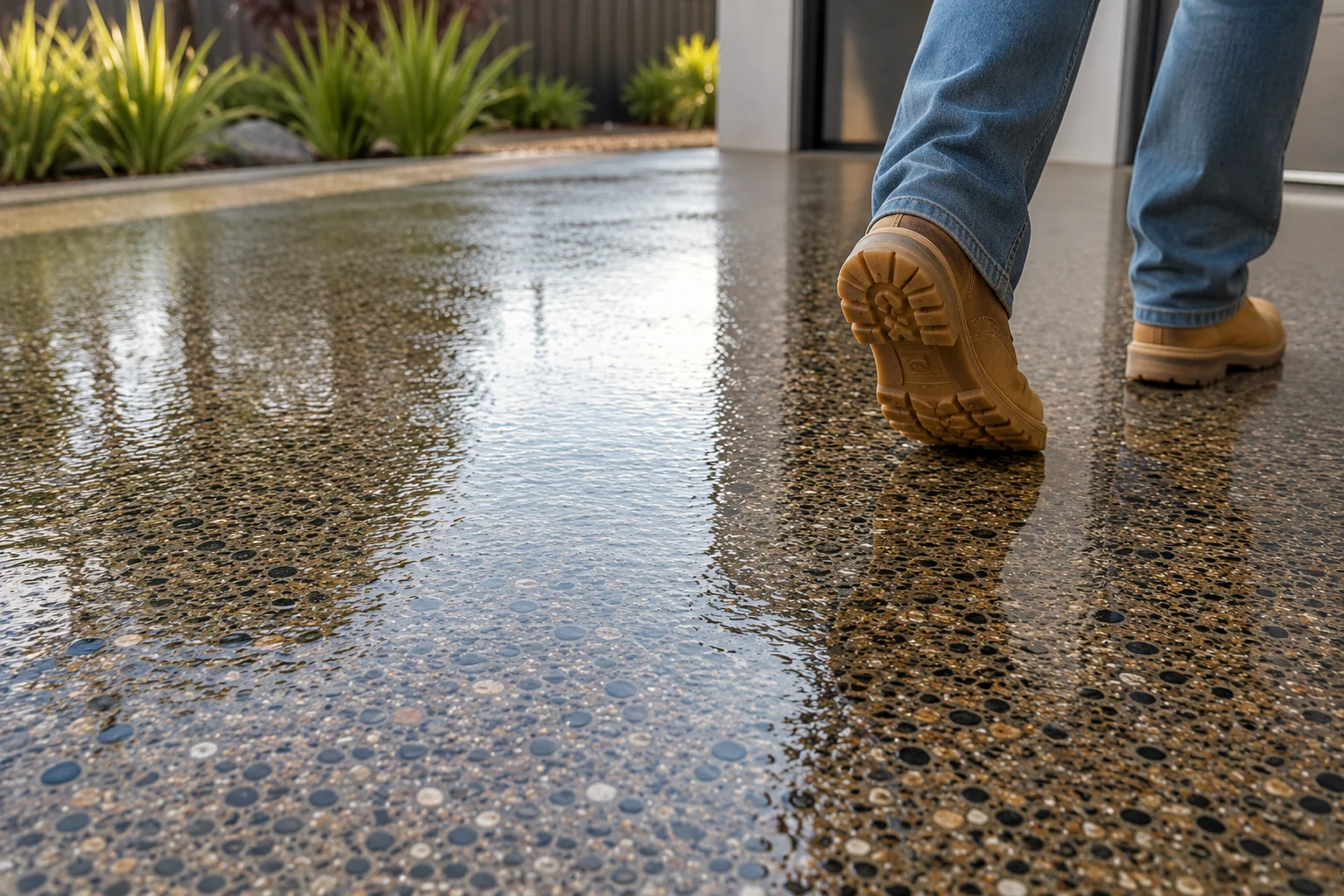
Sealing concrete can make it more slippery, but it does not have to, and whether it does comes down to the type of sealer and the finish underneath it. The main culprit is a glossy, film-forming sealer laid over a smooth, steel-trowelled slab, which creates a hard, shiny surface that gets slick when wet. A penetrating sealer, a matte finish, or a sealer with an anti-slip additive keeps the surface grippy while still giving you the protection sealing provides. In other words, sealing itself is not the problem. The wrong sealer on the wrong surface is. The table below shows how the common options compare for slip.
| Sealer or finish | Slip risk when wet | Best for |
| Glossy film-forming on smooth concrete | High | Indoor, dry, low-traffic areas |
| Matte or satin film-forming | Low to moderate | General outdoor and covered areas |
| Penetrating sealer (no film) | Low | Driveways, paths, pool surrounds |
| Any sealer plus anti-slip additive | Low | Wet areas, ramps, steps, poolsides |
Why Some Sealed Concrete Gets Slippery
To understand the slip, it helps to know how the two main sealer types behave differently on the surface. They protect concrete in opposite ways, and that difference is exactly what decides how grippy the finished floor feels.
A film-forming sealer, such as an acrylic, polyurethane, or epoxy, sits on top of the concrete as a thin coating. When that film is glossy and the concrete beneath it was floated smooth, the surface becomes hard and even, with very little texture for a shoe or bare foot to grip. Add water, and a thin layer sits on top of that slick film, which is when a sealed patio or path can feel like an ice rink. A penetrating sealer, by contrast, soaks into the pores and leaves no film at all, so the natural texture of the concrete stays exposed and the slip risk barely changes. So the slippery reputation sealing sometimes gets really belongs to glossy topical sealers on smooth slabs, not to sealing in general.
The Finish Matters as Much as the Sealer
Before you even choose a sealer, the surface texture of the slab is doing half the work, and it is worth thinking about first. A sealer can only ever make an existing texture smoother or keep it as it is. It cannot add grip that was never there.
A steel-trowelled interior floor is smooth by design, so any glossy sealer on top will feel slick underfoot when wet. A broom-finished path, a textured exterior slab, or an exposed aggregate surface has built-in texture, with small ridges or exposed stone that give feet something to grip even once a sealer goes on. This is why exposed aggregate is such a popular choice around pools and outdoor entertaining areas. It holds its grip well, and we cover this in detail in our guide to whether exposed aggregate is slippery. If slip is a concern, start with a textured finish and the sealer choice becomes far more forgiving.
How to Seal Concrete Without Making It Slippery
The good news is that a slip-safe sealed surface is easy to achieve when you pick the right product for the location. A few straightforward choices cover almost every situation.
Choose a matte or satin sealer instead of a high-gloss one, since the lower sheen usually means a less slick surface. Use a penetrating sealer where grip matters most, such as driveways, paths, and pool surrounds, because it leaves no film to become slippery. Add a fine anti-slip additive to the sealer, which is a grit-like powder stirred into the final coat that creates micro-texture without changing the look much. And match the finish to the traffic, so a smooth glossy floor stays in dry, low-traffic indoor spaces while outdoor and wet areas get texture and a matte or penetrating product. Combining a couple of these, such as a matte penetrating sealer with an anti-slip additive on a textured slab, gives you protection and grip together.
Where Slip Resistance Matters Most
Some areas carry far more slip risk than others, and these are the ones to plan carefully rather than reaching for whatever sealer is on the shelf. Getting these right is about safety, not just appearance.
Pool surrounds and poolside paths are wet by nature and used by bare feet, so they need texture and a non-slick sealer as a baseline. Ramps and sloped driveways combine water run-off with an incline, which multiplies the slip risk. Steps and thresholds are high-consequence spots where a slip can cause a real fall. Entryways and covered outdoor areas get wet in rain and see a lot of foot traffic. For all of these, an anti-slip additive or a penetrating sealer on a textured base is the safer route, and it is worth deciding on the finish and sealer at the same time you choose the right concrete for the job, rather than treating slip as an afterthought.
Do Not Skip Sealing to Avoid Slip
It can be tempting to leave concrete unsealed to sidestep the slip question altogether, but that trades a manageable problem for a bigger one. Sealing does real work that bare concrete misses out on.
A good sealer protects concrete from water, stains, oil, and surface wear, and it helps a decorative finish keep its colour and resist the grime that makes any surface slippery over time. Unsealed concrete is more porous, stains more easily, and can grow algae and moss in damp spots, which is itself a serious slip hazard. Our guide on why sealing your concrete is essential explains the durability side in full. The right answer is not to skip sealing, but to seal with a product and finish chosen for grip, and you can see the options on our concrete sealers page.
Frequently Asked Questions
Does sealing concrete always make it slippery?
No. Only glossy, film-forming sealers on smooth slabs tend to get slippery when wet. Penetrating sealers, matte finishes, and sealers with an anti-slip additive keep the surface grippy while still protecting the concrete.
What is the best non-slip concrete sealer?
For grip, a penetrating sealer or a matte film-forming sealer with a fine anti-slip additive works best. On textured surfaces like exposed aggregate or broom finishes, these keep good traction even in wet conditions.
How do I make already-sealed concrete less slippery?
You can apply a fresh coat of sealer mixed with an anti-slip additive, switch to a matte or penetrating product next time you re-seal, or use anti-slip treatments and mats in the worst spots. A textured surface underneath always helps.