
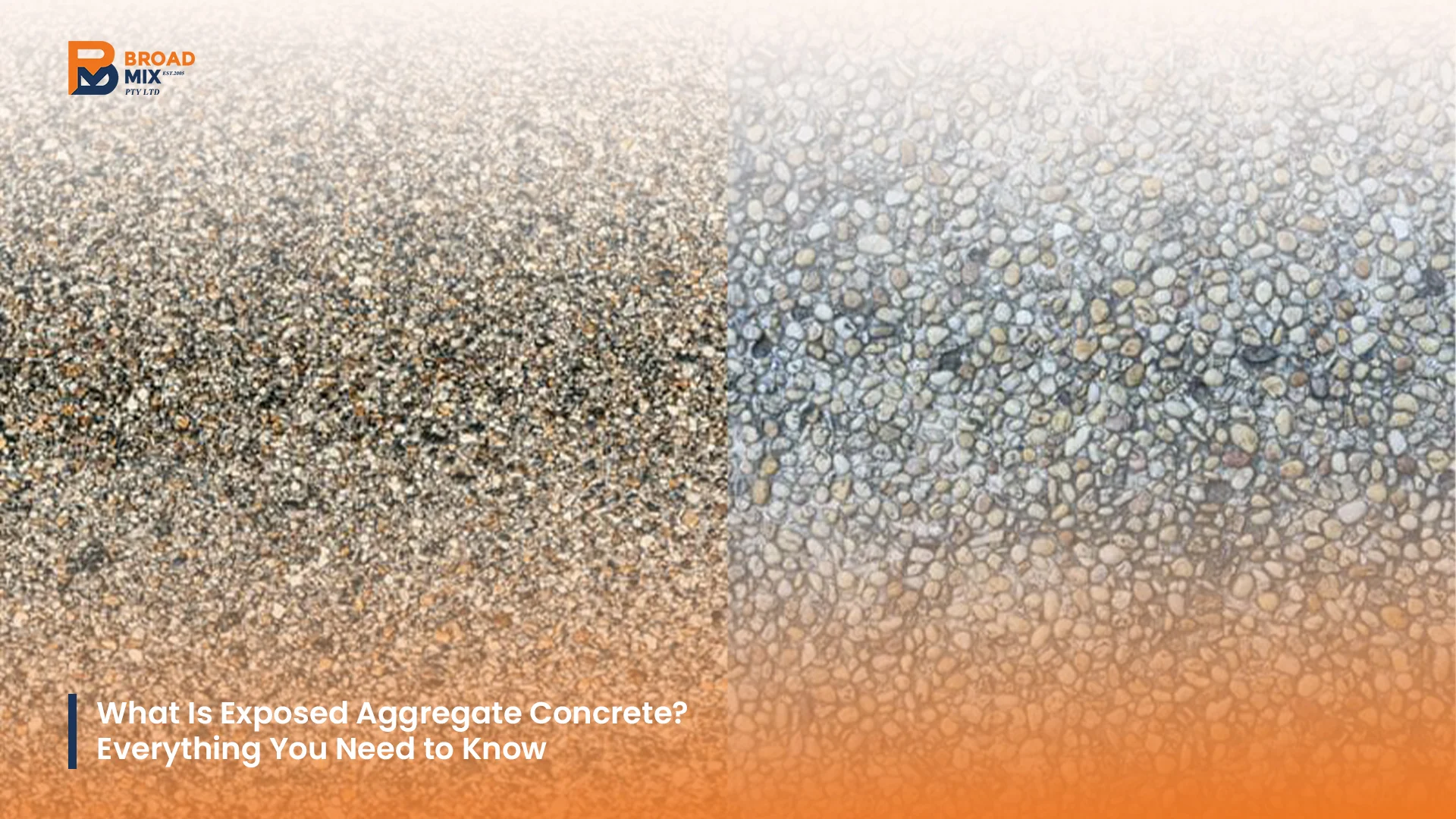
You have probably walked across it without knowing its name. That textured, pebbly surface on a neighbour’s driveway, a local cafe’s outdoor patio, or a council footpath — the one that catches the light in a way plain concrete never does — that is exposed aggregate concrete.
It is one of the most popular decorative concrete finishes used across Australia, and for good reason. It is tough, good-looking, slip-resistant, and surprisingly low maintenance. Yet for many homeowners and first-time builders, it remains a mystery.
In this guide, Broadmix — a proudly Australian owned and family run concrete supplier serving Melbourne and Victoria — breaks it all down for you. Whether you are planning a driveway, patio, pathway, or pool deck, this beginner’s guide will give you everything you need to understand what exposed aggregate concrete is, how it is made, what it costs, how long it lasts, and whether it is the right choice for your project.
What Is Exposed Aggregate Concrete?
Before understanding exposed aggregate concrete, it helps to understand what ‘aggregate’ means. In any concrete mix, aggregate refers to the solid particles mixed into the cement paste — things like gravel, crushed stone, sand, pebbles, or other granular materials. Aggregate gives concrete its body, strength, and mass.
In a standard concrete pour, the aggregate is completely hidden beneath a smooth, grey cement surface. You never see it. But in exposed aggregate concrete, the top layer of cement paste is deliberately removed — revealing the stones, pebbles, or other decorative materials embedded within the mix.
So What Makes It ‘Exposed’?
The word ‘exposed’ simply refers to the finish. After the concrete is poured and begins to set, the thin surface layer of cement mortar is washed or brushed away — leaving the aggregate visible at the surface. The result is a textured, mosaic-like appearance that looks natural, decorative, and distinct from standard grey concrete.
Think of it like a terrazzo floor, but tougher and built for outdoors.
How Is It Different From Plain Concrete?
Plain concrete is poured, levelled, and left to cure with a flat, smooth finish. It is functional but offers little in terms of aesthetics. Exposed aggregate concrete takes the same core material and transforms it into something visually appealing — with colour, texture, and depth that plain concrete simply cannot offer.
| Plain Concrete | Exposed Aggregate Concrete |
|---|---|
| Grey, smooth, uniform finish | Textured, pebbly, decorative finish |
| No visible stones or colour | Aggregate stones visible at surface |
| Tends to show stains and marks easily | Textured surface hides minor imperfections |
| Lower upfront cost | Slightly higher cost with greater visual value |
How Is Exposed Aggregate Concrete Made?
The Core Ingredients
Exposed aggregate concrete uses the same foundational materials as regular concrete — cement, water, and fine sand — but the aggregate component is the star of the show. The choice of aggregate dramatically affects the final appearance, texture, and colour of the finished surface.
Common Aggregate Types Used in Australia
- Pea gravel — small, rounded pebbles in natural tones; a classic and widely used choice
- Crushed granite — angular, durable stones with a natural speckled look
- River rock — smooth, rounded stones in earthy colours
- Quartz — bright, crystalline particles that add light and sparkle
- Recycled glass — coloured glass pieces that create a vibrant, modern finish
- Basalt and blue metal — darker tones for a more contemporary look
At Broadmix, our exposed aggregate concrete is carefully mixed to ensure a consistent distribution of aggregate throughout the pour, giving you a reliable and uniform finish across the entire surface.
Two Main Methods of Creating Exposed Aggregate
- The Surface Retarder Method
This is the most common commercial technique. A chemical surface retarder is applied to the freshly poured concrete, which slows the curing of the top few millimetres of cement paste while the concrete beneath sets normally. After curing, the retarded surface layer is washed away with water and a stiff brush, revealing the aggregate below. This method produces a very consistent and controlled finish.
- The Seeding Method
In this approach, decorative stones or aggregate are manually scattered — or ‘seeded’ — onto the top surface of freshly poured plain concrete, then pressed in and left to partially set. The surface is then washed to expose the seeded material. This method allows for more creative, custom finishes but requires skill to achieve an even result.
The Installation Process at a Glance
- Prepare the base and set formwork
- Pour and level the concrete
- Apply surface retarder or seed aggregate onto fresh concrete
- Allow the mix to reach partial set
- Wash and brush the surface to expose aggregate
- Allow full curing (typically 28 days for full strength)
- Apply a quality sealer to protect the surface
What Does Exposed Aggregate Concrete Look Like?
If you have never seen exposed aggregate concrete up close, imagine the texture of a riverbed — smooth stones packed together and visible at the surface, held firmly in place. The overall appearance is natural, organic, and multi-dimensional.
Unlike plain concrete’s flat grey uniformity, exposed aggregate concrete has depth, colour variation, and a surface that changes slightly in appearance depending on the time of day and the angle of light. In bright sunlight, quartz particles catch the light. In the shade, the natural tones of river pebbles or crushed granite create a more subdued, earthy palette.
Colour and Customisation Options
- Natural tones — cream, sand, charcoal, and grey using local gravels and basalt
- Warm earth tones — terracotta, red, and brown using brick-coloured aggregate
- Bold finishes — black granite, white quartz, or recycled glass for modern builds
- Custom blends — combine aggregates and pigmented cement for a truly unique result
At Broadmix, we offer a range of exposed aggregate mixes designed to suit the architectural styles and outdoor aesthetics commonly found across Melbourne and regional Victoria.
Benefits of Exposed Aggregate Concrete
There is a reason exposed aggregate concrete has remained one of the most popular outdoor surface choices in Australia for decades. The combination of practical advantages and visual appeal makes it hard to beat.
Aesthetic Appeal — The textured, stone-embedded finish adds genuine character and visual interest to any outdoor surface. Whether paired with a modern home or a heritage property, it elevates the overall look far beyond what plain concrete can achieve.
Slip Resistance — The exposed stones create a naturally textured, non-slip surface. This makes exposed aggregate concrete an excellent choice for driveways, pool surrounds, and pathways where wet surfaces can be a hazard.
Durability — Exposed aggregate concrete is built to last. When properly installed and sealed, it handles heavy foot traffic, vehicle loads, UV exposure, frost, and rain without deteriorating quickly.
Low Maintenance — Unlike pavers which can shift, crack, or attract weeds between joints, exposed aggregate is a single continuous surface. Routine cleaning and periodic resealing are all that is required to keep it looking its best.
Hides Surface Imperfections — The textured surface naturally conceals minor cracks, staining, and the wear that comes with time — something smooth concrete struggles to do.
Cost-Effective vs Pavers or Natural Stone — While more expensive than plain concrete, exposed aggregate is significantly more affordable than natural stone paving or premium pavers, while delivering comparable aesthetic results.
Eco-Friendly Options Available — Using locally sourced aggregates or recycled glass can reduce the environmental footprint of your project.
Exposed Aggregate Concrete Pros and Cons
Like any building material, exposed aggregate concrete is not without its trade-offs. Here is an honest overview:
| Pros | Cons |
|---|---|
| Attractive, decorative finish with natural depth | Rougher texture can be uncomfortable on bare feet |
| Excellent slip resistance for wet areas | Can be harder to repair invisibly if cracked |
| Long-lasting — 20 to 30+ years with proper care | Slightly higher upfront cost than plain concrete |
| Low ongoing maintenance requirements | Requires periodic resealing every 2 to 3 years |
| Conceals surface wear and minor flaws naturally | Best installed by experienced professionals |
| Customisable colours, textures, and stone types | May feel hotter underfoot in extreme sun if dark aggregate is used |
Common Uses and Applications
Where Is Exposed Aggregate Concrete Used?
One of the reasons exposed aggregate concrete is so popular is its versatility. It suits a wide range of residential and commercial applications across Melbourne, regional Victoria, and Australia broadly.
Driveways
This is arguably its most popular use. Exposed aggregate concrete handles vehicle weight effortlessly, its non-slip texture adds safety, and it creates an impressive street appeal that significantly improves the overall look of a property from the moment you pull up.
Patios and Outdoor Entertaining Areas
Exposed aggregate creates a welcoming and durable surface for alfresco dining, backyard entertaining, and outdoor living spaces. It holds up well to outdoor furniture, foot traffic, and Australian weather conditions.
Pathways and Walkways
Garden paths, side passages, and pedestrian walkways benefit from the texture and visual interest of exposed aggregate. It is far more attractive than plain grey concrete and provides a better grip in wet conditions.
Pool Decks and Surrounds
Exposed aggregate concrete is a premium choice for pool surrounds because of its slip-resistant surface and heat tolerance. Lighter aggregate choices can keep the surface cooler underfoot in summer.
Commercial Spaces
Shopping centre car parks, council footpaths, public plazas, and commercial forecourts frequently use exposed aggregate concrete for its durability and low maintenance requirements at scale.
Public Infrastructure
Councils and public works projects across Victoria use exposed aggregate on footpaths, roundabout surrounds, park paths, and civic spaces for its longevity and safety-focused surface texture.
Exposed Aggregate Concrete vs Other Concrete Types
Not sure which surface is right for your project? Here is how exposed aggregate stacks up against common alternatives:
| Surface Type | Best For | Aesthetics | Cost Range |
|---|---|---|---|
| Exposed Aggregate Concrete | Driveways, patios, pool decks, paths | High — textured, natural, decorative | Mid to high |
| Plain Concrete | Structural slabs, sheds, garages | Low — grey, flat, functional | Low |
| Stamped Concrete | Decorative patios and paths | High — mimics pavers or stone | High |
| Polished Concrete | Indoor floors, commercial interiors | Very high — glossy and modern | High to very high |
| Pavers | Patios, garden paths, pool areas | High — wide variety | High to very high |
For outdoor residential applications — especially driveways and pool surrounds — exposed aggregate concrete consistently delivers the best balance of aesthetics, durability, safety, and value.
How Long Does Exposed Aggregate Concrete Last?
With proper installation and routine maintenance, exposed aggregate concrete can last 25 to 30 years or more. In many Australian homes, well-maintained exposed aggregate driveways and patios have been in excellent condition for well over three decades.
Factors That Affect Longevity
- Quality of the original concrete mix — higher strength mixes last longer
- Quality of installation — a skilled contractor makes a significant difference
- Regular sealing — resealing every 2 to 3 years protects the surface from moisture, staining, and UV damage
- Climate — freeze-thaw cycles and extreme heat can accelerate wear in some regions
- Traffic load — driveways used by heavy vehicles may show wear sooner than pedestrian paths
Signs Your Exposed Aggregate Concrete May Need Attention
- Visible cracks wider than hairline
- Aggregate becoming loose or pulling away from the surface
- Surface looking dull, porous, or staining easily — a sign the sealer has worn off
- Uneven or sunken sections caused by movement in the subgrade
Minor surface issues can often be addressed with crack repair compounds and resealing. More significant damage may require resurfacing or partial replacement.
Exposed Aggregate Concrete Maintenance and Care
One of the most appealing aspects of exposed aggregate concrete is how straightforward it is to maintain compared to pavers, tiles, or timber decking. Here is what good maintenance looks like:
Routine Cleaning
A regular rinse with a garden hose is usually sufficient for day-to-day cleanliness. For oil stains, bird droppings, or dirt build-up, a mild detergent and a stiff broom followed by a thorough rinse will do the job. Avoid harsh acidic cleaners, as these can etch the surface and damage the sealer.
Resealing
Sealing is the single most important maintenance task for exposed aggregate concrete. A quality sealer forms a protective barrier over the surface that guards against moisture penetration, staining, UV fading, and general wear.
Most exposed aggregate surfaces should be resealed every 2 to 3 years, though high-traffic areas or surfaces exposed to direct sunlight may benefit from annual resealing. At Broadmix, we supply a range of premium concrete sealers suited to exposed aggregate finishes.
Does Exposed Aggregate Concrete Fade Over Time?
Without regular sealing, yes — the surface can lose its colour vibrancy and look dull or bleached, particularly in areas with strong UV exposure. With a quality sealer applied regularly, the colours stay richer and the surface retains its original character for far longer.
Minor Crack Repair
Small cracks can be addressed with a concrete crack filler or flexible sealant. For larger structural cracks, it is best to consult a professional. Cracks left untreated can allow water ingress, which weakens the surface from underneath over time.
How Much Does Exposed Aggregate Concrete Cost?
Cost is one of the first questions homeowners ask, and the answer depends on several factors. The following is a general guide to help you plan your budget.
Approximate Cost Ranges in Australia
| Application | Approximate Cost Range (per m²) |
|---|---|
| Basic exposed aggregate (standard aggregate) | $80 – $130 per m² installed |
| Mid-range (decorative aggregate, larger area) | $110 – $160 per m² installed |
| Premium (custom blends, feature aggregates) | $150 – $200+ per m² installed |
Note: These figures are indicative estimates for the Melbourne and Victoria region and can vary significantly based on site conditions, access, and contractor rates. Always obtain a formal quote.
What Affects the Final Price?
- Aggregate type — specialty or imported aggregates cost more than locally sourced gravels
- Area size — larger areas generally bring the cost per square metre down
- Site preparation — excavation, subgrade work, and drainage add to the total
- Labour rates — vary by contractor experience and location
- Sealing — add approximately $8 to $15 per m2 for a quality sealer application
- Formwork complexity — curves, steps, or intricate shapes increase labour costs
Is Exposed Aggregate Concrete Worth the Investment?
For most homeowners, the answer is yes. When you factor in the long lifespan, low maintenance requirements, and the curb appeal it adds to a property, exposed aggregate concrete offers strong long-term value compared to alternatives that cost more to install or more to maintain.
Conclusion
Exposed aggregate concrete is more than just a surface — it is a long-term investment in the look, safety, and value of your property. By revealing the natural beauty of stone and aggregate within a durable concrete matrix, it offers something that plain concrete simply cannot: character.
Whether you are planning a new driveway, transforming an outdoor entertaining area, redesigning a pool surround, or laying a garden path, exposed aggregate concrete deserves serious consideration. It combines the structural reliability of concrete with the visual appeal of natural stone — at a fraction of the cost.
At Broadmix, we supply high-quality exposed aggregate concrete to homeowners, builders, and contractors across Melbourne and Victoria. Our experienced team is ready to help you choose the right mix for your project, with reliable delivery and genuine local knowledge built into every order.
Frequently Asked Questions
What is the difference between exposed aggregate and regular concrete?
Regular concrete is left with a smooth, flat grey surface after pouring. Exposed aggregate concrete has its outer layer removed to reveal the stones or pebbles within the mix, creating a textured, decorative finish.
Is exposed aggregate concrete good for driveways?
Yes — it is one of the most popular driveway surfaces in Australia. It handles vehicle weight well, provides a non-slip surface in wet conditions, and looks far more appealing than plain concrete.
Is exposed aggregate concrete slippery when wet?
No. The textured surface of exposed aggregate concrete actually provides better grip than smooth concrete, making it a safer choice for wet areas including pool surrounds, pathways, and driveways.
How long does exposed aggregate concrete last?
With proper installation and regular maintenance — particularly sealing every 2 to 3 years — exposed aggregate concrete can last 25 to 30+ years.
How do you maintain exposed aggregate concrete?
Regular cleaning with a hose or mild detergent, and resealing every 2 to 3 years, is all that is typically required. Avoid harsh chemicals and repair any cracks promptly.
How much does exposed aggregate concrete cost per square metre in Victoria?
Installed costs typically range from $80 to $200+ per square metre depending on the aggregate type, project size, site conditions, and contractor. Contact Broadmix for guidance on supply pricing and local contractor referrals.