
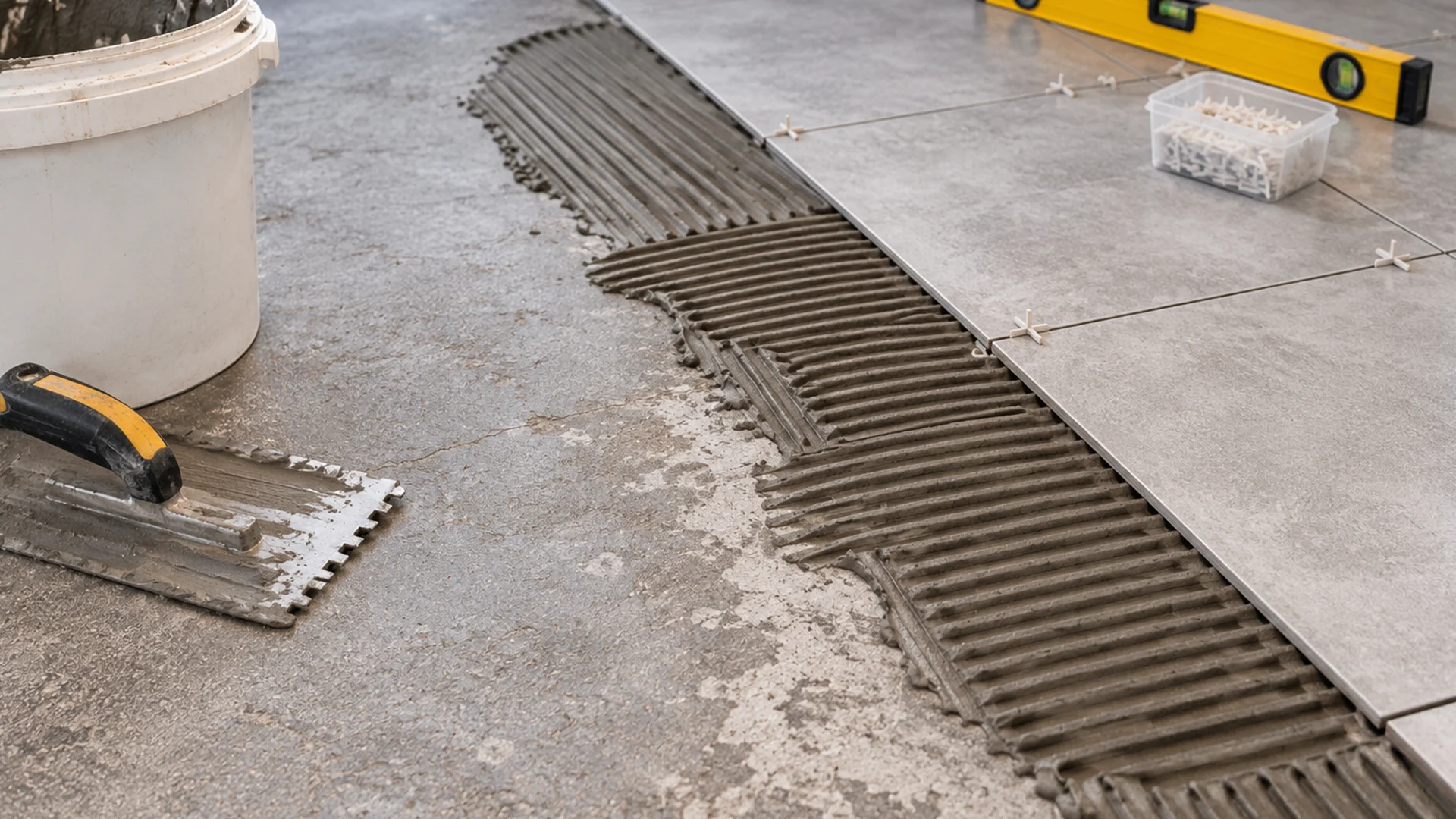
In most cases, no, you should not seal concrete before tiling, and doing so can actually cause the tiles to fail. Standard tile adhesive is cement based and needs to grip a clean, sound, slightly absorbent surface. A sealer forms a barrier across the slab that stops the adhesive bonding, which can lead to drummy, lifting, or cracked tiles down the track. What a slab really needs before tiling is to be fully cured, clean, structurally sound, and in many cases primed with a bonding primer, which is a very different product from a sealer. In wet areas it also needs a waterproof membrane. The table below clears up the three products people most often confuse.
| Treatment | What it does | Before tiling? |
| Concrete sealer | Blocks the pores and repels moisture | No, it stops the adhesive bonding |
| Bonding primer | Controls porosity and improves adhesion | Often yes, if the adhesive system calls for it |
| Waterproof membrane | Stops water reaching the slab | Yes, in bathrooms, showers, and balconies |
Why Sealing Before Tiling Usually Backfires
A tile adhesive works by keying into the surface it is spread on. On concrete, that means the slab needs open, clean pores for the adhesive to grab, and enough suction to pull the bond tight as it sets. Anything that coats or fills those pores works against that.
A concrete sealer is designed to do exactly the thing you do not want here. Penetrating sealers block the pores from within, and topical sealers lay a film across the top. Either way, the adhesive ends up bonding to the sealer rather than to the concrete, and that bond is far weaker. The result can be tiles that sound hollow when tapped, lift at the edges, or crack as the floor moves. If your goal is a tiled floor that stays put, an unsealed but properly prepared slab is what you want, not a sealed one.
Cured Is Not the Same as Dry
Before any tiling starts, new concrete has to be given time to cure, and this is where a lot of problems begin. Concrete keeps gaining strength and releasing moisture for weeks after it is poured, and tiling too early traps that moisture under the tiles.
As a general rule, a new slab should be left to cure for at least 28 days before tiling, and longer in cool or damp conditions. Laying tiles over a green slab risks moisture pushing up through the adhesive, which can cause bond failure, lifting, and even efflorescence staining. If you are pouring a new slab that will be tiled, it pays to start with the right mix and let it cure properly. Our guide to choosing the right concrete for your project covers matching the slab to the job, our note on concrete grades and MPa explains how to pick the right strength for a floor, and a quality pre-mix concrete batched to a set strength gives you a consistent, tile-ready base.
What the Slab Actually Needs Before Tiling
Rather than sealing, the real preparation is about getting the surface clean, sound, and ready to bond. A few checks cover most floors.
The slab should be free of dust, oil, grease, paint, and any old adhesive or curing compound, since all of these stop a new bond forming. It should be structurally sound, with any large cracks or crumbling patches repaired first. It should be reasonably flat, because tiles need an even bed to sit on. And crucially, if the slab was cured using a curing compound or membrane, that coating usually has to be ground or stripped off before tiling, for the same reason a sealer causes trouble. Once the surface is clean, sound, and bare, it is ready for priming.
Primer, Not Sealer: The Product People Mix Up
This is the point that causes the most confusion, because a primer and a sealer sound similar but do opposite jobs. A sealer is meant to block the surface. A bonding primer is meant to improve the bond.
Many tile adhesive systems call for a bonding primer or an SBR-based primer on concrete, especially where the slab is very porous, very smooth, or dusty. The primer soaks in and either steadies the porosity so the adhesive cures correctly, or gives a smooth slab more grip. It does not seal the concrete off the way a protective sealer does. If you have read that you need to prime concrete before tiling, that advice is almost always about a bonding primer, not a concrete sealer. Always follow the instructions for the specific adhesive you are using, because the primer is chosen to match it.
Wet Areas Are Different: Waterproofing Over Sealing
There is one place where a coating absolutely does belong under your tiles, and it is easy to mistake for sealing. In bathrooms, showers, laundries, and on balconies, the slab needs a waterproof membrane before tiling, and in most of Australia this is a compliance requirement, not an optional extra.
A waterproof membrane is not the same as a concrete sealer. It is a purpose-made system applied to the prepared slab and up the walls to a set height, designed to stop water reaching the structure, and tiles are laid directly onto it using the compatible adhesive specified by the membrane maker. So in a wet area the sequence is prepare the slab, waterproof it, then tile, with no general-purpose concrete sealer involved at any stage. Waterproofing is a job worth getting a licensed professional to handle where the rules require it.
When Sealing the Concrete Does Make Sense
Sealing still has its place, just not as a step before tiling. It is worth knowing the difference so you seal the right surfaces at the right time.
If you are leaving concrete exposed as the finished floor, or protecting an outdoor slab, driveway, or decorative finish, then a sealer is exactly right and adds real durability, and you can see the options on our concrete sealers page. The rule is simple. Seal concrete that will stay on show, and leave concrete bare and primed when tiles are going over the top. Get that distinction right and both the tiled floors and the exposed slabs on your project will last.
Frequently Asked Questions
Can you tile directly onto concrete without sealing it?
Yes, and in most cases you should. A clean, cured, sound slab is tiled using cement-based adhesive, often over a bonding primer. Sealing first blocks the adhesive from bonding and can cause tiles to lift or crack.
Do you need to prime concrete before tiling?
Often yes. Many adhesive systems recommend a bonding primer on concrete, especially if the slab is porous, smooth, or dusty. A primer improves adhesion, which is the opposite of what a sealer does, so the two should not be confused.
How long should concrete cure before tiling?
As a general guide, allow at least 28 days, and longer in cool or damp conditions. Tiling over a slab that has not fully cured can trap moisture, leading to bond failure, lifting, and efflorescence.
Do I need to waterproof concrete before tiling a bathroom?
Yes. Wet areas such as bathrooms, showers, and balconies need a waterproof membrane over the prepared slab before tiling, which is usually a compliance requirement. This is a waterproofing system, not a standard concrete sealer.