
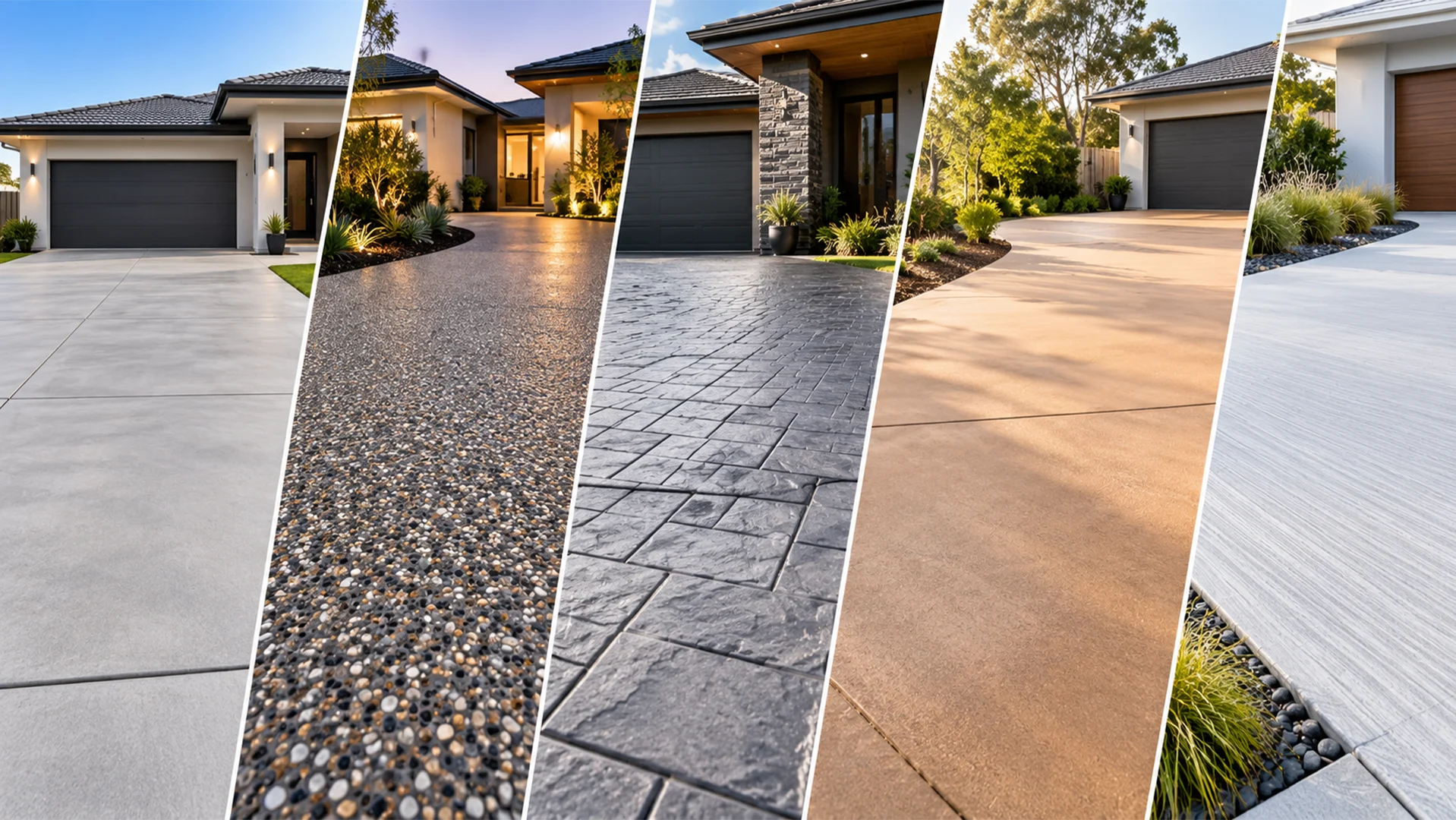
The main concrete types for driveways are plain, exposed aggregate, coloured, stencilled, stamped, honed and permeable, each differing in finish, cost and upkeep. Before comparing them it helps to know that you are really making two decisions rather than one. Some of these are mix types, meaning the concrete arrives from the plant already different, and some are finishes applied to ordinary concrete on site while it is still workable. Coloured, permeable and exposed aggregate change what is in the truck. Stencilled, stamped, honed and broom finishes change what happens after it is poured. Plenty of driveways combine both, such as coloured concrete with an exposed aggregate finish. Sorting which decision you are making first turns a confusing list into a straightforward choice.
| Type | Mix or finish | Look | Relative cost | Upkeep |
|---|---|---|---|---|
| Plain, broom finish | Finish | Standard grey, textured | Lowest | Low, seal optional |
| Exposed aggregate | Both | Natural stone surface | Mid to high | Seal every 2 to 3 years |
| Coloured | Mix | Solid colour through the slab | Low to mid | Seal to protect tone |
| Stencilled | Finish | Brick or paver pattern | Mid | Reseal to keep pattern crisp |
| Stamped | Finish | Textured stone or timber look | High | Reseal every 2 to 3 years |
| Honed or polished | Finish | Smooth, ground, refined | Highest | Low, periodic resealing |
| Permeable | Mix | Open, coarse texture | Specialist | Needs occasional clearing |
Mix Type and Finish Are Two Different Decisions
Getting this distinction clear saves a lot of confusion when you start getting quotes, because suppliers and concreters are answering different halves of the question.
A mix type is decided at the batching plant. Coloured concrete has oxide pigment dosed through the whole load, permeable concrete has the fine material left out so water passes through it, and an exposed aggregate mix carries decorative stone chosen to be seen. Order those and the truck brings something different from standard concrete. A finish is what a concreter does to the surface in the hours after the pour, using tools, stencils, stamps or a retarder, and it works on concrete that arrived ordinary. We supply the mixes. Your concreter delivers the finish. On most jobs the two need to be booked together, since the finish often has to happen the same day the concrete lands.
Plain Concrete
Plain grey concrete with a broom finish is the default driveway across Australia and it remains the sensible choice for a great many homes. There is no shame in it.
The surface is textured by dragging a broom across the concrete while it is still setting, which gives grip underfoot and in the wet, hides minor marks, and costs nothing extra. It is the cheapest option, the fastest to lay, and the easiest to repair or extend later because there is no pattern or colour to match. Sealing is optional rather than essential, though it helps with oil staining. If your driveway is not a feature of the house, or the budget is going into other things, standard pre-mix concrete with a broom finish does the job for decades.
Exposed Aggregate
Exposed aggregate is the most popular decorative driveway finish in Australia and it is what we are best known for supplying. It looks like stone because it is stone.
A retarder is sprayed onto the fresh concrete to slow the top few millimetres of cement paste, which is then washed off hours later to reveal the decorative aggregate beneath. The result is a hard-wearing, naturally textured surface with real grip, available in a wide range of stone colours and sizes. It hides dirt and tyre marks well, it suits both modern and traditional homes, and it wears extremely well because the surface is aggregate rather than paste. It needs sealing every two to three years to keep the stones sharp and the colour rich. See our exposed aggregate concrete range, or read the benefits of exposed aggregate for a fuller picture.
Coloured Concrete
Coloured concrete moves a driveway away from grey without changing the finish, and it is the least expensive way to make a plain slab look considered.
Iron oxide pigment is added at the plant so the colour runs through the full depth of the slab rather than sitting on the surface, which means chips and wear do not expose a grey base underneath. Charcoals and greys suit modern homes and hide marks well, while sandstones and warmer tones work around gardens and pool surrounds. It pairs with any finish, so you can have coloured concrete with a broom, stencilled or exposed aggregate surface. Expect it to look considerably lighter once cured than it did wet, which is normal, and sealing restores much of that depth. Our post on coloured ready mix concrete covers the range.
Stencilled Concrete
Stencilled concrete gives you the look of pavers or brickwork on a single continuous slab, which is its main practical advantage.
Paper stencils are laid over the fresh concrete, a coloured surface hardener is applied over the top, and the stencils are lifted to leave crisp mortar lines in the pattern. Because it is one slab rather than individual pavers, there are no joints for weeds to grow through and nothing to lift or become uneven over time. It suits traditional and period homes particularly well. The trade-off is that the colour and pattern sit on the surface rather than running through, so it depends on a maintained sealer and it will need resealing to stay sharp. Repairs are also harder to blend than on a plain slab.
Stamped Concrete
Stamped or imprinted concrete presses a texture into the surface while the concrete is still plastic, producing a slab that mimics stone, slate, timber or cobbles.
Rubber mats are pressed into the fresh surface after a colour hardener and release agent have been applied, giving both pattern and depth. The effect can be convincing and it is the most decorative option available, which is why it sits at the higher end on cost. Like stencilling, the colour is largely a surface treatment, so sealing is not optional and resealing every two to three years is part of owning one. Heavily textured patterns hold dirt more than a smooth or broom finish, so factor cleaning into the decision if the driveway sits under trees.
Honed and Polished Concrete
Honed concrete is ground back mechanically after curing to cut through the surface paste and reveal the aggregate in a smooth, flat plane rather than a textured one.
The result is refined and architectural, closer to polished stone than to a driveway, and it is the most expensive option here because of the grinding time involved. It shows off decorative aggregate beautifully and suits contemporary homes. Two cautions matter outdoors. A honed surface is smoother than exposed aggregate, so slip resistance depends on the level of grind and the sealer chosen, and it is worth discussing before committing. It also shows marks more readily than a textured finish, which means sealing and prompt cleaning matter more.
Permeable Concrete
Permeable concrete lets water pass straight through the slab into the ground beneath, and it exists to solve a drainage or planning problem rather than an aesthetic one.
The fine material is largely left out of the mix, leaving connected voids that water drains through. This reduces runoff, helps manage stormwater on site, and is increasingly relevant because many new estate planning permits require water-permeable surfaces on driveways and paths. The surface is coarser and more open in appearance than standard concrete, and the voids need occasional clearing so they do not silt up and lose permeability. If a permit condition mentions permeable surfacing, this is one of the options that can satisfy it. See our permeable concrete page, and send us the permit condition if you want it checked.
How to Choose
Working through four questions in order will usually land you on the right type without agonising over the list.
Start with whether you have a planning condition to satisfy, because a permeable requirement narrows the field immediately. Then decide how much you want the driveway to be a feature, since a driveway visible from the street and framing the house justifies spending more than a side access to a shed. Third, be honest about maintenance, because stencilled and stamped finishes depend on a maintained sealer while plain and exposed aggregate are more forgiving. Fourth, settle the structural side, which is the same regardless of what it looks like, and our driveway MPa guide covers strength while choosing the right concrete for your project covers the wider decision. Whichever you choose, plan the sealer in from the start rather than treating it as an afterthought. Talk to us on +61 3 5784 1500 or through our contact page and we will help you match the mix to the finish you want.
Frequently Asked Questions
What is the most popular type of concrete driveway in Australia?
Plain concrete with a broom finish remains the most common by volume because it is the most affordable. Among decorative finishes, exposed aggregate is the clear favourite, valued for its natural stone look, grip and hard-wearing surface.
What is the cheapest concrete driveway option?
Plain grey concrete with a broom finish. It uses standard mix, needs no additional materials or specialist finishing, and pours quickly. Coloured concrete is usually the next step up and the least expensive way to move away from grey.
Which concrete driveway lasts longest?
All of these use the same underlying concrete, so longevity depends far more on thickness, base preparation and curing than on the finish. Where finishes differ is in how they age. Exposed aggregate and integral colour wear well because the surface goes through the slab, while stencilled and stamped finishes depend on a maintained sealer.
Can I combine concrete driveway types?
Yes, and it is common. Coloured concrete pairs with broom, stencilled, exposed aggregate or honed finishes, because the colour is in the mix and the finish is applied separately. Tell your supplier and concreter what combination you want so the mix and the finishing method suit each other.