
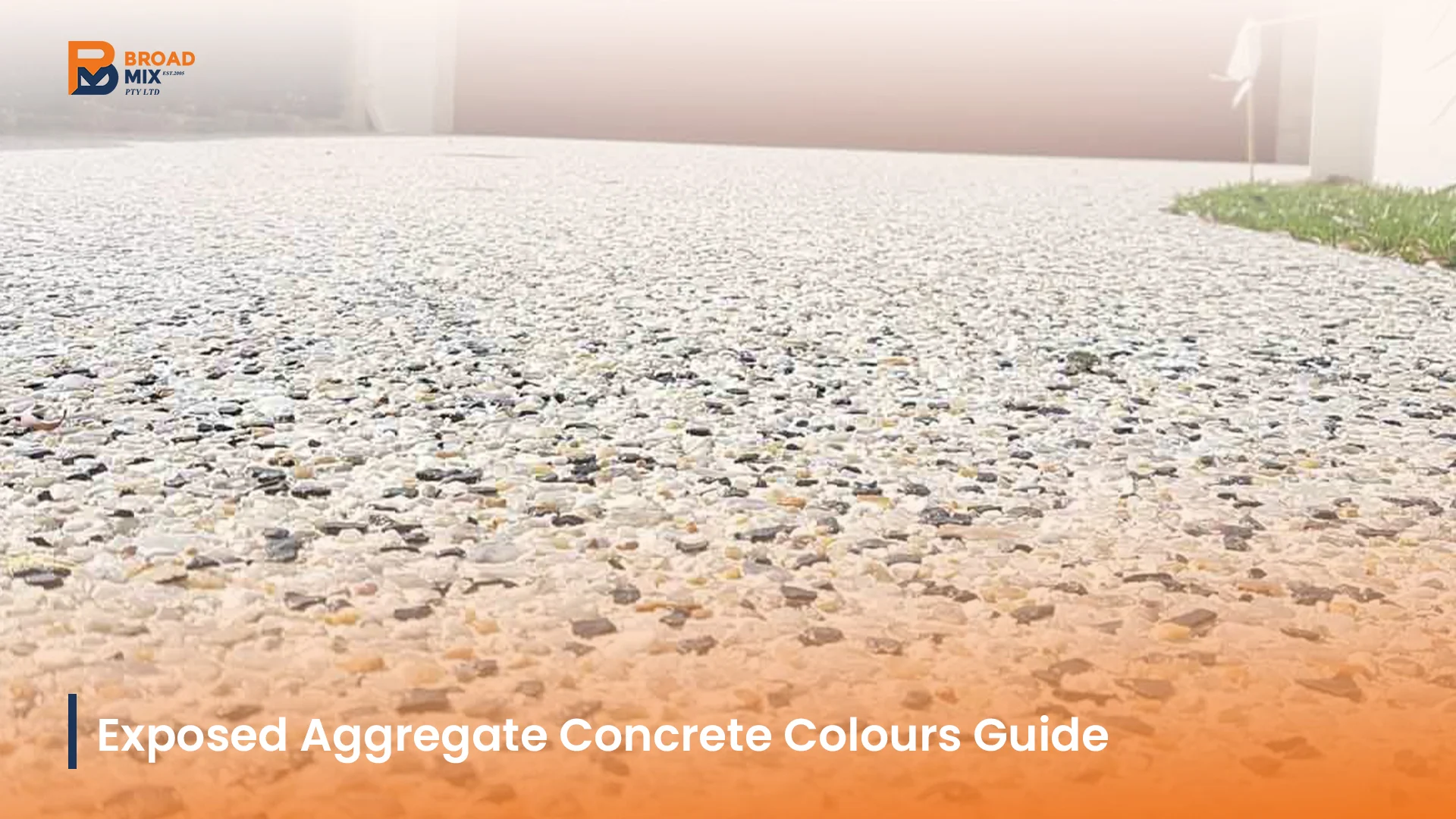
The colour of your exposed aggregate driveway is one of the most permanent decisions you will make about your home's exterior — so it deserves more thought than a quick look at a catalogue. This guide walks you through the most popular exposed aggregate concrete colours available in Australia, what works well in Central Victoria's natural landscape, and how to avoid the common mistake of choosing a colour in a showroom that looks completely different in full sunlight on your block.
How Exposed Aggregate Colour Actually Works
The colour of an exposed aggregate surface comes primarily from the aggregate itself the stones, pebbles, or crushed rock embedded in the mix and secondarily from the cement paste colour. Unlike coloured concrete where pigment is mixed into the cement, exposed aggregate colour is largely determined by the natural tones of the aggregate material. This means the colour is inherent, not applied — which makes it more durable and UV-stable than surface-applied finishes.
Popular Exposed Aggregate Colours in Australia
Salt and Pepper
Salt and pepper is the most widely used exposed aggregate finish in Australia, and for good reason. It uses a blend of fine white and dark grey aggregate typically a combination of white quartz and dark basalt — to create a balanced, neutral surface that complements almost any home exterior. It is not as high-contrast as it sounds; in practice, the effect is a clean, subtle texture that ages well and hides tyre marks and minor surface wear effectively.
For Central Victoria homeowners, salt and pepper is a safe, timeless choice that pairs well with brick, weatherboard, and modern facade materials alike.
White and Cream Aggregate
White exposed aggregate often using white quartz or white granite crushed aggregate — creates a light, bright surface that reflects heat and looks striking against dark mulch gardens or green lawns. It is increasingly popular on modern and coastal-style homes. The main consideration: white surfaces show tyre marks and oil more visibly than darker alternatives, so regular cleaning and good sealing are important.
Natural River Pebble (Earth Tones)
River pebble mixes use smooth, rounded stones in natural ochre, brown, grey, and sand tones. The result is an organic, natural look that blends with the rural and semi-rural landscape common across the Broadford, Kilmore, and Seymour areas. River pebble aggregate has a slightly smoother texture than crushed granite which some homeowners prefer underfoot — and tends to read as warmer and more relaxed than grey or dark finishes.
Charcoal and Dark Grey
Charcoal exposed aggregate uses dark basalt, black granite, or similar dark aggregate to create a moody, high-contrast surface. It is a strong choice for modern architectural homes and pairs well with white renders, black-framed windows, and coastal grey cladding. The trade-off: dark surfaces absorb significantly more heat in summer a real consideration in Central Victoria's hot months — and can fade slightly over time without proper UV-protective sealing.
Grey Exposed Aggregate
Standard grey aggregate using crushed granite or local blue metal is the workhorse of the exposed aggregate range. Not as neutral as salt and pepper, not as bold as charcoal, grey aggregate gives a strong, durable surface with good versatility. It reads as contemporary without being stark, and holds its appearance well across different light conditions.
What to Consider Before Choosing a Colour
Look at your home's roof colour, render or cladding tones, garden palette, and the colour of neighbouring driveways not to match them, but to ensure yours works in context. Always view aggregate colour samples in natural light at your actual property. A sample that looks warm in a showroom may read cold in your shaded, south-facing driveway.
Colour perception of aggregate surfaces can shift significantly between overcast and direct sunlight conditions which is why concrete suppliers recommend viewing samples on your actual site before committing.
Frequently Asked Questions
What is the most popular exposed aggregate colour in Australia?
Salt and pepper remains the most widely chosen exposed aggregate finish in Australia due to its versatility, neutral tone, and ability to complement a wide range of home styles. In Central Victoria specifically, natural river pebble and grey aggregate are also extremely popular — particularly on rural and semi-rural properties where organic tones suit the surrounding landscape.
Can I choose a custom aggregate colour with Broadmix?
Broadmix supplies a range of exposed aggregate mixes with different aggregate types and tones. For custom blends or specific aggregate combinations, speak to our team about what is available and lead times. Some premium aggregate options may require advance ordering.
Does exposed aggregate colour fade over time?
The natural aggregate itself is very colour-stable — it does not fade the way surface-applied coatings do. However, the cement paste surrounding the aggregate can lighten over time with UV exposure and weathering. Sealing with a quality UV-stable sealer significantly slows this process and keeps the surface looking its best.
Is white exposed aggregate harder to maintain?
White aggregate shows oil drips, tyre marks, and leaf staining more readily than darker finishes. Regular cleaning and good sealing are more important with lighter aggregate colours. That said, well-maintained white aggregate looks genuinely stunning and is a popular choice for homeowners willing to do periodic maintenance.
See Your Options With Broadmix
Broadmix supplies exposed aggregate concrete in a range of aggregate options to homeowners and concreters across Central Victoria. Whether you have a colour in mind or you are starting from scratch, we can walk you through what we supply and what works best for your specific site and home style.
Visit broadmix.com.au or call our Broadford depot to discuss your driveway project.