
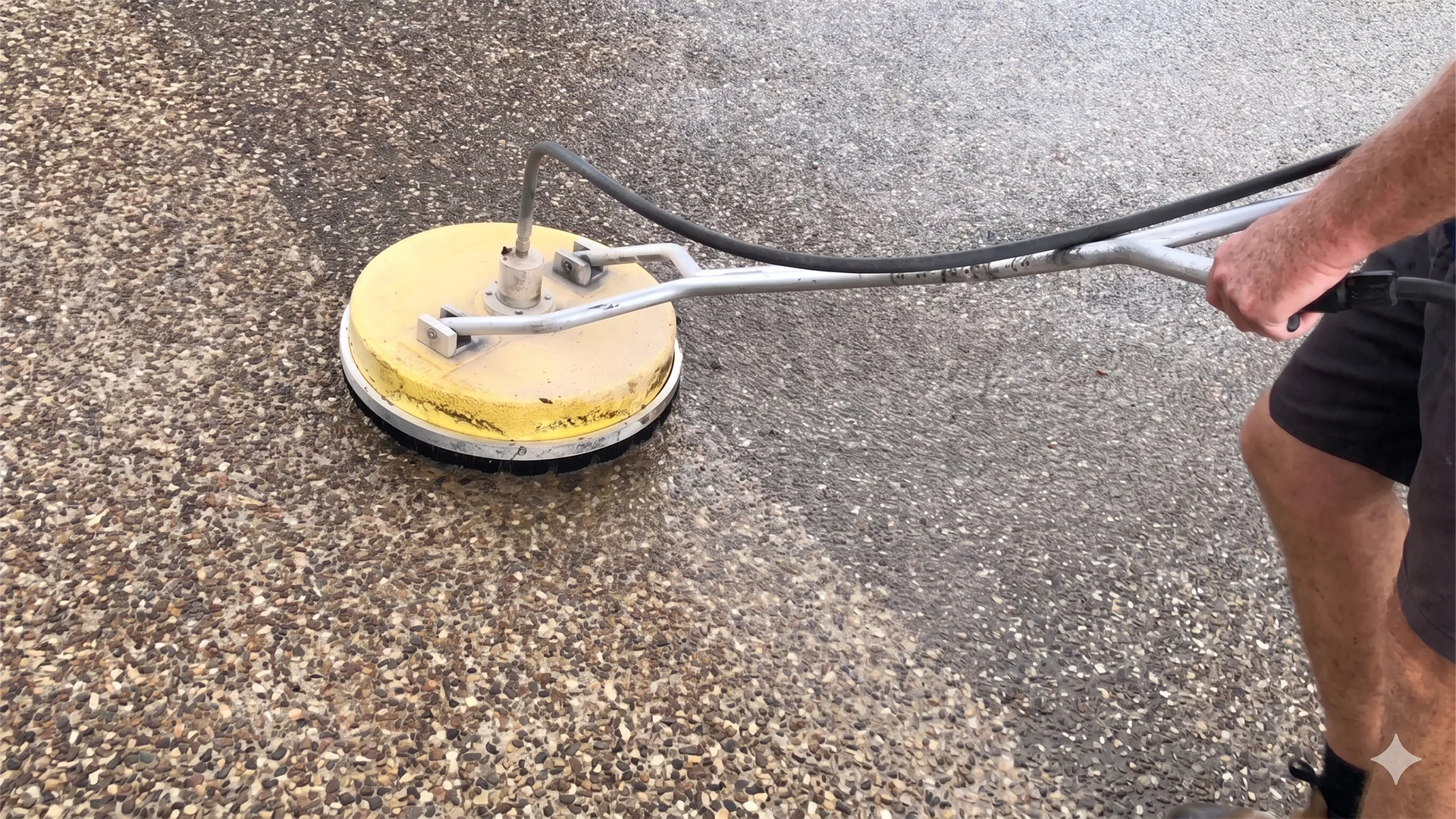
To clean exposed aggregate, sweep off debris, wet the surface, apply a pH-neutral cleaner, scrub gently, then rinse with a pressure washer kept under 3000 PSI. Use a degreaser for oil and an acid-based remover for rust, and treat mould with a diluted outdoor cleaner. Do this every few months, reseal when needed, and the surface stays looking new for years.
How often should you clean it?
For most Melbourne homes, a light wash every three to four months keeps exposed aggregate looking the way it did on day one. That timing isn’t arbitrary. Driveways and alfresco areas collect a thin film of dust, pollen and tyre residue that you barely notice until it dulls the stones. Areas under trees or near garden beds need more attention because falling leaves and fertiliser run-off stain faster. A quick seasonal rinse with the garden hose between proper cleans makes the bigger jobs far easier, since nothing has had time to bond into the surface. Leave it a full year and you stop cleaning dirt and start fighting stains.
What’s the best cleaner to use?
The honest answer is that the surface dictates the product, not the other way around. For general grime, a pH-neutral concrete cleaner does the job without touching your sealer. Around Melbourne, plenty of homeowners reach for a diluted outdoor cleaner concentrate, which lifts mould and everyday dirt cheaply and predictably. Step up to a dedicated degreaser only when oil or carbon deposits are the problem, and save acid-based cleaners for iron staining, where nothing else works. The mistake we see most often is people buying the strongest product on the shelf and applying it neat. That strips sealer and can etch the cement paste around the pebbles, leaving a patchy, washed-out look. Match the cleaner to the actual stain, always test a small corner first, and follow the dilution rate on the label rather than guessing. A milder product used correctly beats a harsh one used in a hurry every time.
Can you use vinegar or bleach?
Both get recommended online, and both come with caveats worth knowing. Vinegar is a mild acid, so it can shift light mineral deposits, but used repeatedly it slowly eats into the cement holding your aggregate together. Bleach kills mould and brightens the surface, yet it does nothing for the root cause and can lighten coloured concrete unevenly if it pools. Neither is something we’d reach for as a first option. If you do use bleach on a mould patch, dilute it heavily, keep it off nearby plants, and rinse thoroughly. For anything beyond a quick spot treatment, a purpose-made cleaner is safer for both the concrete and the surrounding garden.
What PSI is safe to pressure wash?
Pressure washing is where good driveways get damaged. A domestic unit running between 1500 and 2500 PSI is plenty for exposed aggregate, and you should stay under 3000 PSI as a hard ceiling. Use a 25 to 40 degree fan tip, never a turbo or pinpoint nozzle, and keep the wand around 30 centimetres off the surface. Hold it too close or too long in one spot and you’ll blast the cement out from between the stones, which loosens the pebbles permanently. Work in steady overlapping passes rather than scrubbing one area. Professionals run higher pressures and hot water, but that’s possible because they keep the wand moving evenly and read the surface as they go. If you’re unsure, start gentle and increase slowly. You can always do another pass, but you can’t put the aggregate back.
How do you remove oil and rust stains?
These are the two stains that survive a normal wash, and they need different chemistry. For fresh oil, blot it, then work a degreaser into the surface with a stiff brush, let it dwell, and rinse. Older oil that has soaked in may need a poultice that draws the oil back out over a day or two. Rust is the tricky one. In Melbourne it usually comes from sprinkler bore water or fertiliser landing on the concrete, and it leaves orange or brown marks that ordinary cleaners won’t touch. Rust responds only to an acid-based or oxalic acid rust remover made for concrete. Apply it to the stain, give it time to react, scrub gently, then neutralise and rinse well. Reseal the spot afterwards, because acid treatment strips whatever protection was there.
How do you get rid of mould and moss?
Shaded, damp sections of a driveway are where mould, moss and black algae take hold, and Melbourne’s wetter months make this the most common complaint we hear. Clear any moss physically first, then treat the area with an outdoor cleaner or a heavily diluted bleach solution and let it sit so it kills the spores rather than just the surface colour. Skip this dwell time and it returns within weeks. The longer-term fix is addressing why it grew: improve drainage, trim back overhanging plants to let sunlight in, and keep the surface sealed. A good sealer stops moisture sitting in the concrete, which is exactly what moss and algae need to establish.
Should you DIY or hire a pro?
DIY genuinely works for routine cleaning, and most homeowners can keep a driveway looking sharp with a hose, a brush and the right cleaner. The maths changes when stains are stubborn or the area is large. By the time you’ve hired a pressure washer, bought several products and lost a weekend, the cost gap to a professional clean narrows considerably, and you carry the risk of damaging the surface or not shifting the stain at all. A professional brings hot water systems, the correct chemicals for each stain, and the judgement to clean evenly. Our rule of thumb: handle the regular upkeep yourself, and call Broadmix in for set-in oil, rust, widespread mould, or when you want the surface cleaned and resealed properly in one visit.
Bring your exposed aggregate back to life with Broadmix. Our Melbourne team cleans, treats and reseals driveways, paths and alfresco areas the right way. Get in touch today for a free, no-obligation quote. Call us at +61 3 5784 1500