
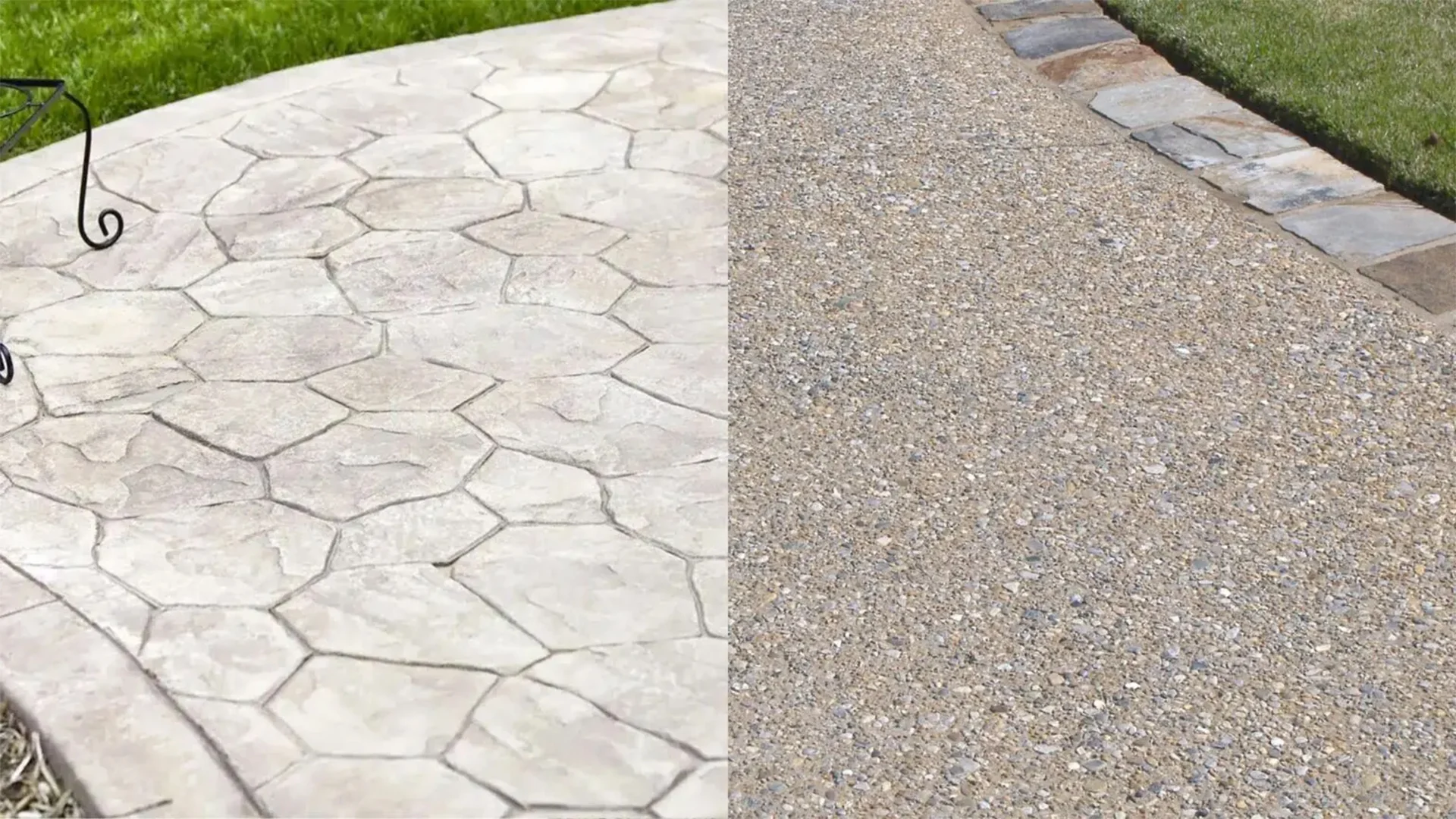
Choosing a decorative finish for your driveway, patio or pool surround usually comes down to two popular options: exposed aggregate and stencil concrete. The short answer? Exposed aggregate wins on long-term durability and grip, while stencil concrete wins on pattern variety and a lower upfront spend but the right choice depends on your block, your budget and how long you want it to look good. Here’s the honest breakdown, including one thing most articles get wrong.
Exposed aggregate vs stencil concrete — the quick verdict
| Feature | Exposed Aggregate | Stencil Concrete |
| Look | Natural stone, textured | Patterned (brick, tile, cobble) |
| Durability | Very high (stone won’t fade) | Moderate (surface layer wears) |
| Slip resistance | Excellent | Good when sealed |
| Maintenance | Reseal every 3–5 years | Reseal every 2–3 years |
| Lifespan | 25–40+ years | 10–20 years |
| Fade risk | Very low | Higher (UV affects colour) |
| Best for | Driveways, pool surrounds, paths | Patios, courtyards, feature areas |
Not sure which suits your block? You can request a free supply quote from your local Broadmix team and talk it through before you commit.
What is exposed aggregate concrete?
Exposed aggregate concrete is concrete with its decorative stones revealed at the surface. Instead of a smooth grey finish, you see and feel the natural pebbles, granite or quartz embedded in the mix.
How it’s made
A retarder is applied to the freshly poured surface to slow the top layer from setting. The thin layer of cement paste is then washed away, exposing the stone beneath while leaving it firmly locked into the cured concrete below. The result is a hard-wearing, textured surface.
The look and feel
Because the colour and character come from the stone itself — not a coating — exposed aggregate keeps its appearance for decades. You can tailor the result by choosing different stones and tones; our guide to exposed aggregate colours shows the range. The trade-off is a textured surface that’s brilliant underfoot in shoes but a little rough for bare feet.
What is stencil concrete? (and why it’s not stamped concrete)
Stencil concrete creates the look of pavers, bricks or tiles using a patterned template and coloured surface treatment — without laying a single brick.
How stencil concrete is made
A paper or vinyl stencil is laid onto freshly placed concrete. A coloured oxide or colour hardener is then broadcast over the top, and the stencil is lifted away to leave clean “grout lines” mimicking brick or tile. The pattern and colour sit in the top surface layer of the slab.
Stencil vs stamped vs exposed aggregate — clearing up the confusion
This trips up almost everyone, so here’s the difference in plain terms:
- Stencil concrete — a flat, patterned colour effect on the surface (2D look).
- Stamped concrete — a 3D texture physically pressed into the wet concrete with rubber mats.
- Exposed aggregate — natural stone revealed by washing back the surface.
Most “exposed aggregate vs stencil” articles you’ll find online actually compare stamped concrete. They’re three genuinely different finishes, and the distinction matters most for durability — which we’ll get to next.
Exposed aggregate vs stencil concrete: a side-by-side comparison
Appearance & design flexibility
Stencil concrete is the more versatile of the two for pattern — running brick, cobblestone, ashlar tile and decorative borders are all on the menu. Exposed aggregate offers variety through stone choice and colour rather than pattern, giving a more natural, organic finish. If you want a courtyard that reads like heritage brick, stencil shines. If you want a timeless, textured surface, aggregate wins.
Durability & lifespan
This is the big one. Exposed aggregate’s beauty is structural — it’s the stone in the concrete, so it can’t peel, flake or fade. A well-laid aggregate surface comfortably lasts 25–40 years or more. Stencil concrete’s pattern is a surface colour layer, which is more exposed to wear, tyre scuffing and UV. Expect 10–20 years with diligent resealing.
The finish is only ever as strong as the slab beneath it. Both options rely on a correctly specified mix — if you’re unsure what strength to order, our explainer on MPa in concrete and choosing the right grade makes it simple, and our concrete calculator helps you order the right volume.
Slip resistance & safety
Exposed aggregate’s raised texture makes it one of the grippiest finishes available — great for driveways, ramps and pool surrounds. Stencil concrete is smoother and relies on a quality sealer for grip. We cover this in depth in our guide on whether exposed aggregate is slippery.
Maintenance & resealing
Both finishes need resealing, but stencil concrete needs it more often — every 2–3 years — to protect the colour layer, versus every 3–5 years for aggregate. Using the right product matters; browse our sealers and protectors range for options suited to each finish.
Performance in Central Victorian weather
Our region throws hot, dry summers and cold, frosty winters at outdoor surfaces. Exposed aggregate handles UV and freeze-thaw cycles especially well because there’s no surface colour to bleach out. Stencil concrete can fade faster under strong sun if the seal lapses, so it’s better suited to shaded patios than full-sun driveways here.
Cost considerations
Stencil concrete is usually cheaper upfront, while exposed aggregate costs more initially but spreads that cost over a much longer lifespan. Rather than chase the lowest sticker price, weigh cost-per-year. For honest regional figures, see our guide to concrete cost per m³ in Victoria.
What are the disadvantages of each finish?
No finish is perfect. Here’s the honest list.
Downsides of exposed aggregate
- Higher upfront cost than stencil or plain concrete.
- Textured surface is less comfortable for bare feet.
- Repairs can be harder to colour-match if stones are damaged.
Downsides of stencil concrete
- Surface colour layer fades and wears faster, especially in full sun.
- Shorter lifespan and more frequent resealing.
- Patterns can look dated sooner than a natural stone finish.
Is exposed aggregate outdated?
No — it’s one of the most enduring decorative finishes precisely because it doesn’t chase trends. A natural stone surface reads as timeless rather than of-the-moment, which is why it remains a default choice for quality driveways and pool surrounds across Australia. Stencil patterns, by contrast, can date the way a specific tile or brick style dates.
Which finish is right for your project?
Best for driveways
Exposed aggregate, almost every time. It takes vehicle loads, resists fading and grips in the wet — exactly what a driveway demands.
Best for patios & pool surrounds
Aggregate is the safer, longer-lasting pick for pool surrounds thanks to its grip. For a covered or shaded patio where you want a decorative brick or tile look, stencil concrete is a strong, budget-friendly option.
Best for budget vs longevity
If the lowest upfront cost is the priority and the area is shaded, stencil concrete makes sense. If you want the longest life and lowest lifetime cost, exposed aggregate is the better investment. There’s a real advantage to ordering from a nearby plant either way — we explain it in why local beats large when choosing a concrete supplier in Central Victoria.
Get the right mix for your Central Victoria project
Whichever finish you choose, it starts with quality concrete delivered fresh. Broadmix supplies exposed aggregate and pre-mix concrete across Broadford, Kilmore, Seymour and surrounding towns. Order exposed aggregate or pre-mix delivered to your site — request a quote and we’ll help you get the mix right the first time.
Frequently asked questions
What’s the difference between stencil and exposed aggregate concrete?
Exposed aggregate reveals natural stone in the concrete for a textured finish, while stencil concrete uses a template and coloured surface layer to mimic brick or tile patterns.
Which lasts longer, stencil or exposed aggregate?
Exposed aggregate lasts longer typically 25–40+ years versus 10–20 years for stencil concrete — because its appearance comes from durable stone rather than a surface colour layer.
Is stencil concrete cheaper than exposed aggregate?
Stencil concrete is usually cheaper upfront, but exposed aggregate often costs less over its lifetime thanks to its longer life and lower maintenance.
Does stencil concrete fade?
Yes, the surface colour can fade under UV exposure over time, which is why regular resealing every 2–3 years is important.
Is exposed aggregate good for driveways?
Yes its strength, grip and fade resistance make it one of the best decorative finishes for driveways.