
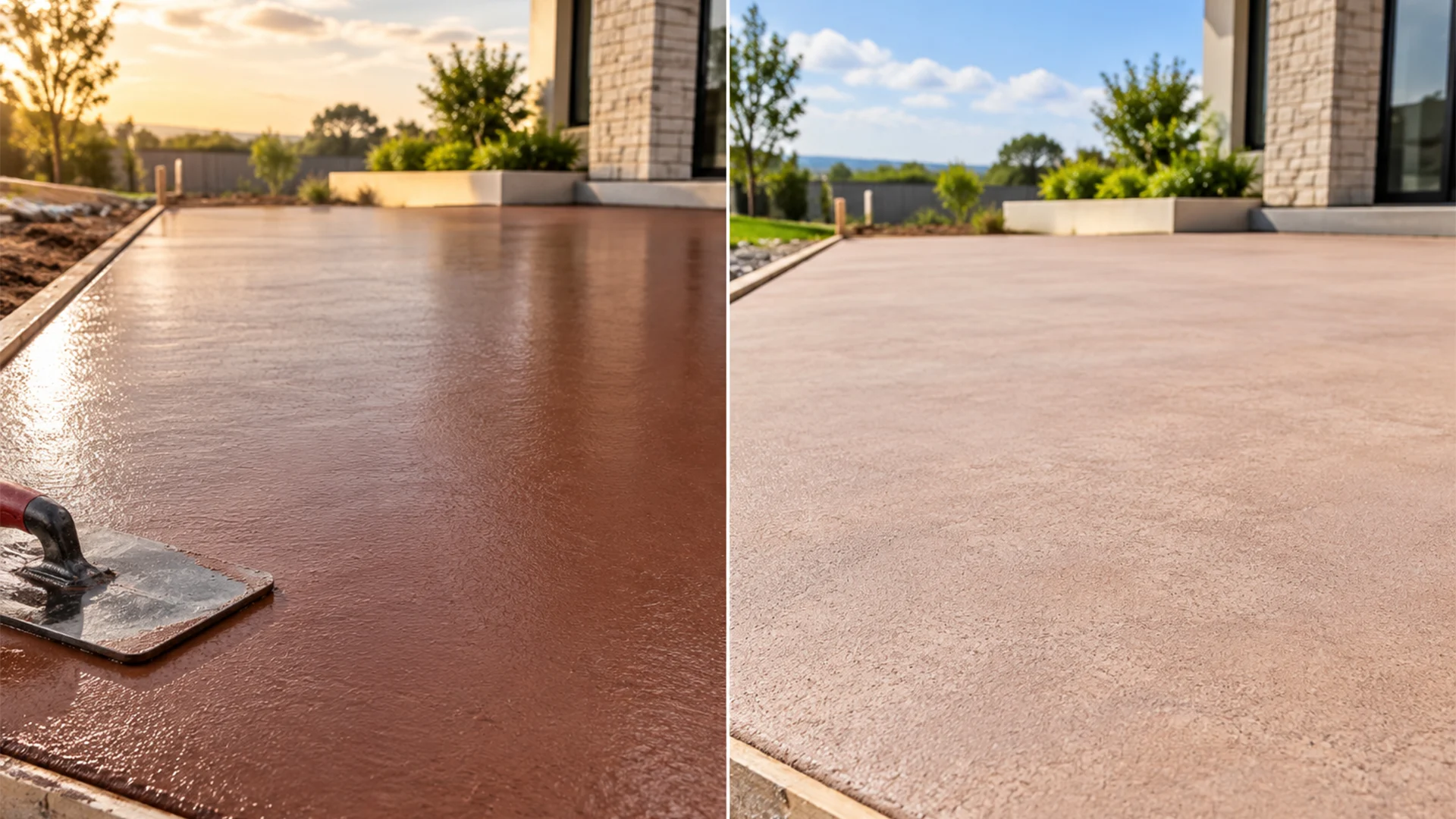
Yes, coloured concrete lightens as it dries, and often by more than people expect, because water leaving the surface pores changes how the slab reflects light. A freshly poured slab is at its darkest and richest while it is still wet, then it fades steadily over the first few weeks as moisture evaporates. This is normal and it is not a batching fault. Most of the lightening happens in the first seven days, the colour keeps settling for around 28 days while the cement finishes curing, and a white chalky haze called efflorescence can make it look lighter still. Sealing brings much of the depth back. The practical rule is simple: do not judge the colour of a coloured slab until it has cured for a month and been sealed.
| Stage | What you see | Roughly how long |
|---|---|---|
| Freshly poured, still wet | Darkest and richest it will ever look | Day 1 |
| Surface moisture leaving | Noticeable, sometimes alarming lightening | Days 2 to 7 |
| Continued curing | Gradual lightening, colour evens out | Weeks 2 to 4 |
| Cured | True unsealed colour visible | About 28 days |
| Efflorescence, if it appears | Patchy white or chalky haze over the colour | Weeks to months |
| After sealing | Tone deepens, close to the original wet look | After curing |
Why Wet Concrete Looks Darker Than Dry Concrete
The colour has not changed at all. What changes is the surface, and how light behaves when it hits it.
Concrete is porous, and when those surface pores are full of water the slab reflects less light back at you and appears deep and saturated. As the water evaporates, air replaces it in the pores, the surface scatters far more light, and the same pigment now reads as a lighter, flatter shade. It is the same effect you see when a wet stone dries out or a patch of wet sand pales as the tide goes out. The oxide pigment in a coloured mix is unchanged and still runs through the full depth of the slab, as our post on coloured ready mix concrete explains. You are simply seeing it through a dry surface instead of a wet one.
How Long the Colour Takes to Settle
The lightening is not a single event. It happens in stages, and knowing them stops the day-three panic.
The sharpest change comes in the first week, when the bulk of the surface moisture leaves and the slab moves from deep and wet to visibly paler. Through weeks two to four the change slows considerably, the tone evens out across the slab, and patches that dried at different rates start to blend. At around 28 days the concrete has completed the bulk of its curing and what you are looking at is the true unsealed colour. Weather stretches or compresses this. A hot, dry, windy week pushes moisture out fast and can leave a lighter, more variable finish, while cool damp conditions slow everything down and the slab holds its darker look for longer.
Efflorescence, the Other Reason It Looks Lighter
If your slab develops a patchy white or chalky bloom, that is a separate process from drying, and it is worth recognising because it worries people the most.
As moisture moves out of curing concrete it carries dissolved lime with it. That lime reaches the surface, reacts with carbon dioxide in the air and leaves behind a fine white calcium carbonate deposit. On plain grey concrete you would barely notice it. On a charcoal or terracotta slab it reads as a washed-out haze sitting over the colour, and it often appears unevenly, which makes it look like a batching problem when it is not. It is most common in the first weeks and through cool damp weather. In most cases it weathers away over the following months, and where it does not, it can usually be cleaned off with a purpose-made efflorescence remover before sealing.
Why Sealing Brings the Colour Back
Sealing is the step that recovers most of what you lost to drying, and for coloured concrete it is not optional if you care how the slab looks.
A sealer fills the surface pores with resin, which does the same job the water was doing on day one. Light stops scattering off a dry porous surface, and the tone deepens back toward the rich shade you saw when the truck left. How far it goes depends on the product, since a solvent-based or wet-look sealer gives the strongest colour lift while a matte penetrating sealer protects with a subtler change. Sealing also shields the pigment from UV fading and stops stains soaking in. Timing matters though. Most sealers want the full 28 days of cure first, because sealing a slab that is still releasing moisture traps it underneath and you get a bloom under the surface within months. Our guide on why sealing your concrete is essential covers the products, and you can see the range on our concrete sealers page.
What Makes One Slab Lighten More Than Another
Two slabs poured from the same colour batch can finish at slightly different shades, and the reasons are all on the site rather than in the truck.
Water added on site is the most common cause, because extra water in the mix both weakens the concrete and dilutes the depth of colour in the finished surface. Inconsistent finishing is next, since areas trowelled harder or at different times cure at different rates and dry to different tones. Uneven curing does the same thing, which is why a slab drying in patchy sun and shade often finishes patchy. The finish itself matters too, as a smooth trowelled surface reads darker than a broom finish because it reflects light differently. Ordering the whole pour as one colour batch from one supplier removes the biggest variable before you start, which is why we batch pre-mix concrete to a set dose for the full volume.
When to Judge the Colour
Give it a month. Almost every colour concern we hear in the first week resolves itself without anyone doing anything.
Wait until the slab has cured for around 28 days and been sealed, then look at it in daylight rather than under artificial light or on an overcast afternoon. If at that point the colour is genuinely wrong, distinctly different from the sample, or varies sharply between loads rather than blending, that is worth a conversation. Call us on +61 3 5784 1500 or send the details through our contact page and we will look at what was batched and what happened on the day. Planning a coloured pour and want to get the tone right first time? Talk to us about a sample before you order.
Frequently Asked Questions
How much lighter does coloured concrete get as it dries?
Expect a clear and noticeable change rather than a subtle one, particularly over the first week. A slab that looked deep and saturated while wet will dry back to a distinctly paler version of the same shade. Sealing recovers a good deal of that depth.
How long before coloured concrete reaches its final colour?
Around 28 days for the concrete to cure and the tone to settle, though most of the visible lightening happens in the first seven days. The colour you judge should be the sealed, fully cured slab, not the one you see mid-week.