NO FINES CONCRETE
No fines concrete has no sand in it. The stones are held together by a thin coat of cement paste, which leaves small open gaps all the way through. Rain runs down through those gaps instead of sitting on top or washing across your block.
You’ll also hear it called permeable or pervious concrete. We make it at our Broadford plant and send it out across the Mitchell Shire, including Seymour, Kilmore, Wallan and Tallarook.
WHAT IS NO FINE CONCRETE?
It’s just cement, water and stone, with every stone close to the same size. With no sand to fill the spaces, the mix can’t pack tight. Some people call it popcorn concrete, and once you see it you’ll know why.
It’s weaker than a standard driveway mix, so it isn’t right for every job. It earns its place on sites that hold water: sloping blocks, low spots that puddle after every storm, and behind retaining walls, where trapped water can push the wall out.
If your soil is heavy clay, mention it when you call. Water gets through the slab quickly, but clay takes it away slowly, so the base may need a drain outlet.
Where Does the Water Go?
Straight down. It passes through the slab into the crushed rock base, sits there for a while, then soaks into the soil. On a normal slab the same rain would run off the edge, often towards the garage or next door.
You get fewer puddles and less water washing across the surface. Some councils accept permeable paving as part of a stormwater plan, but check with yours before you count on it.

Placing It Right
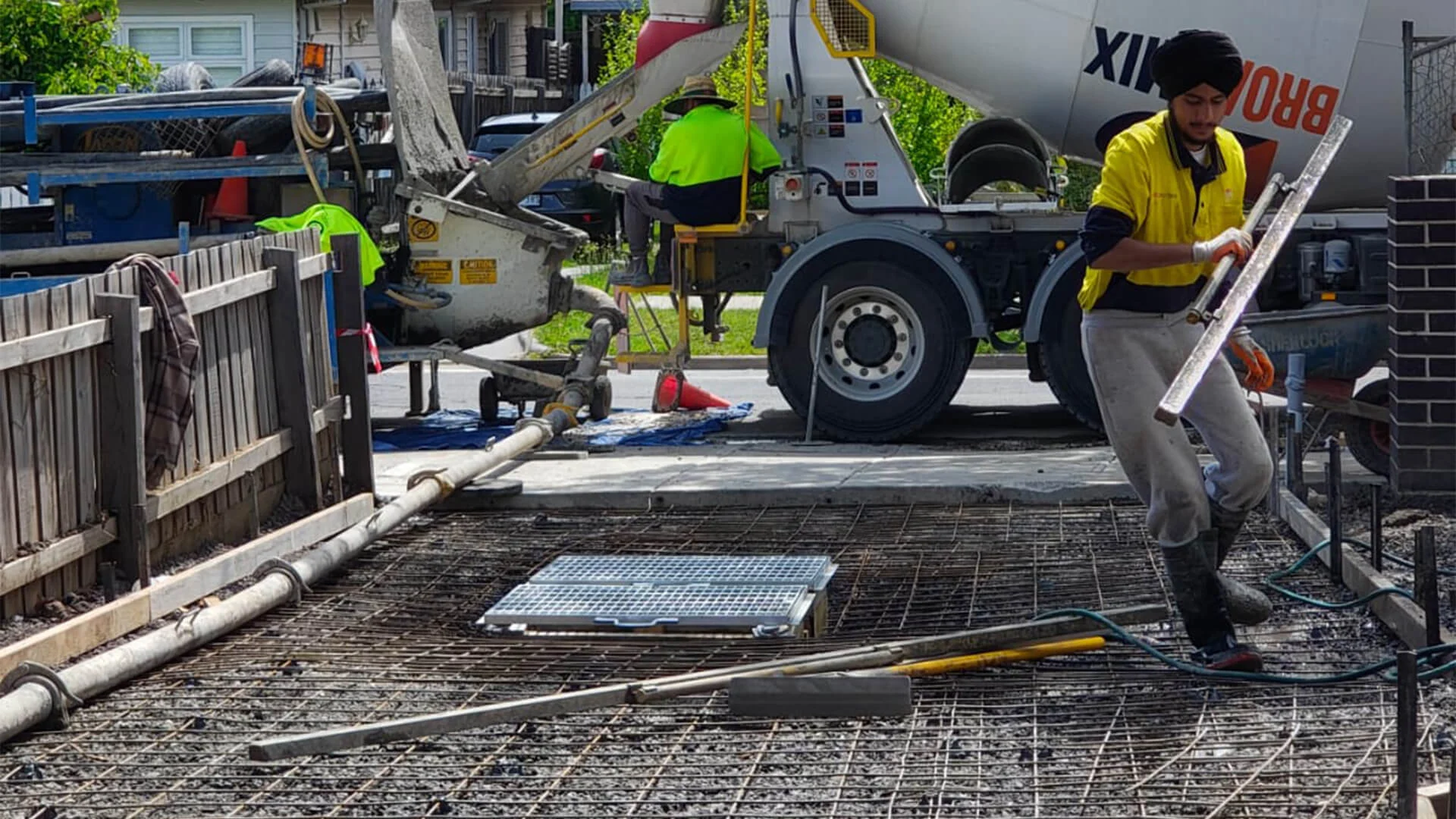
No fines stiffens faster than a normal mix. Have the base compacted and the crew on site before the truck turns up.
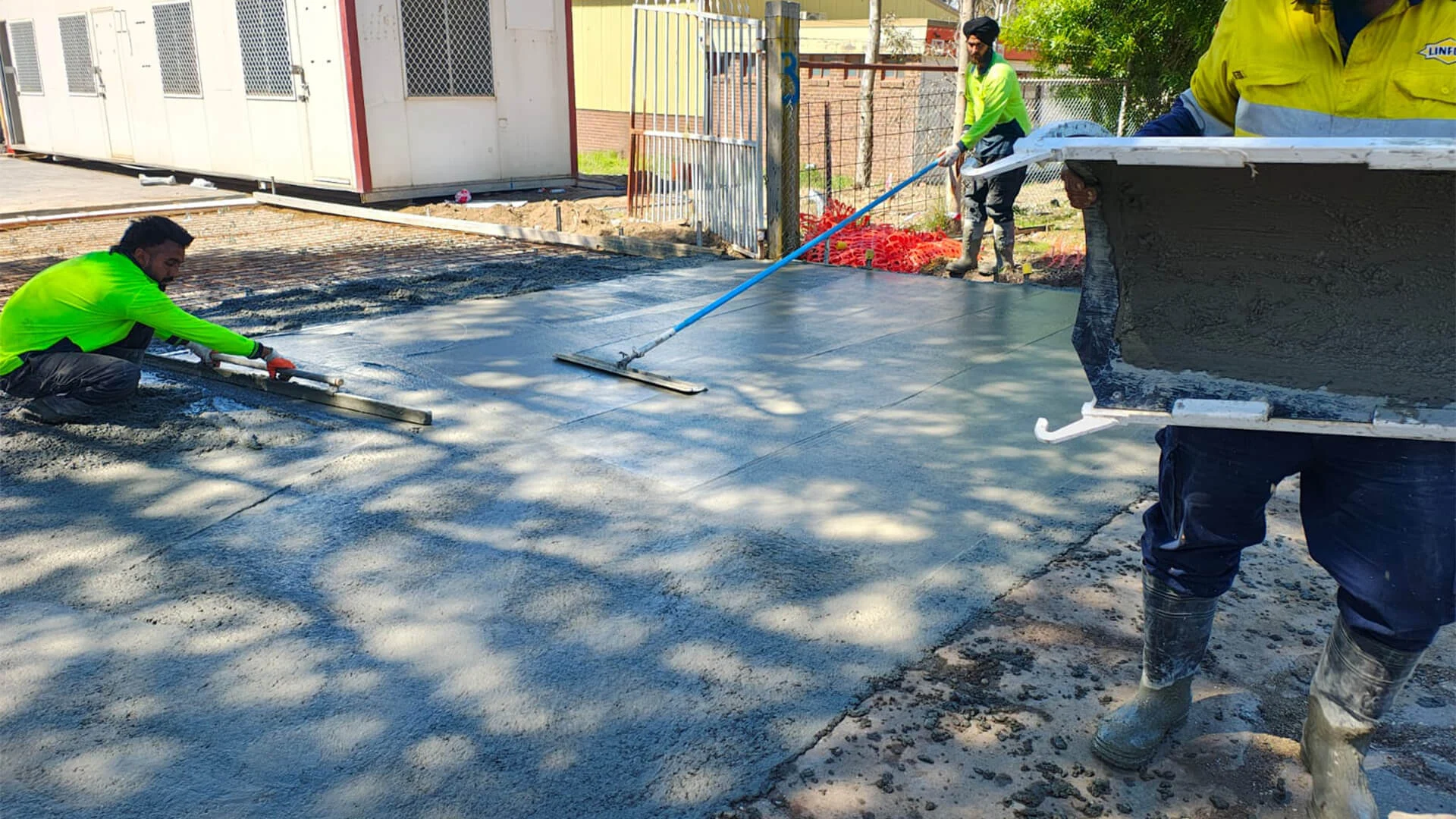
Spread it, then roll or tamp it lightly. Don’t vibrate or float it, as that closes the gaps and stops it draining. Get plastic over it straight after placing and leave it covered for about a week so it doesn’t dry out too fast.
After that, keep soil and mulch off it. When it starts draining slowly, a sweep or a hose on low pressure clears it. Skip film-forming sealers, because they can block the pores.