
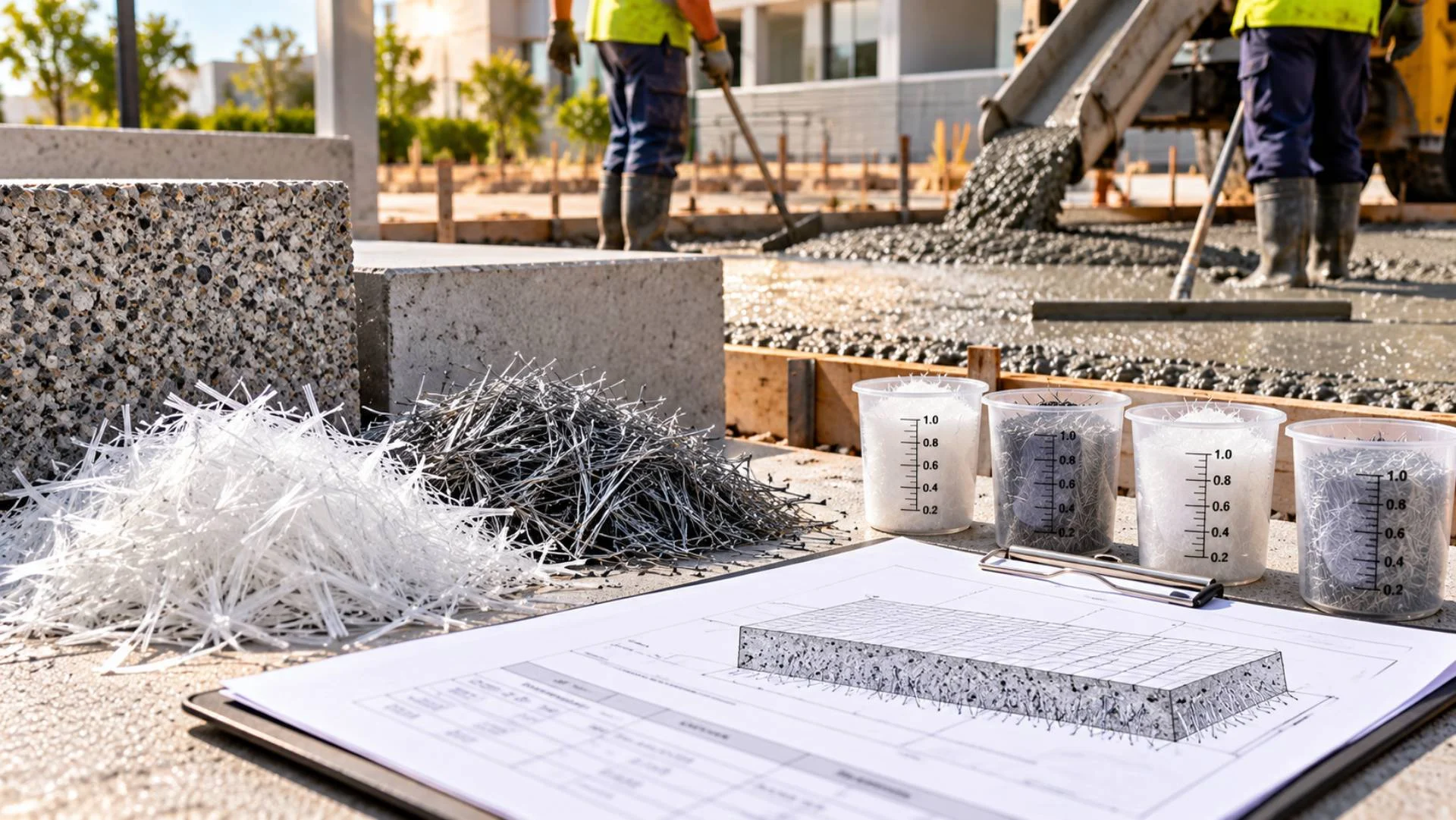
At most batching plants, fibres are one of the most common extras added to an order, alongside colour and accelerators. They are easy to add, inexpensive compared with the total cost of a pour, and useful on a wide range of jobs, from shed slabs to garden paths.
Yes, you can order concrete with fibre reinforcement added. Fibres are mixed into the concrete at the plant or in the truck, so they arrive spread evenly through every cubic metre. Tell your supplier when you order which fibre type you need, and roughly how much. Your engineer, builder or supplier can help with both.
Which projects benefit from fibres?
| Project | Common fibre choice | Why |
| Shed and garage slabs | Micro, sometimes macro | Reduces early cracking on large flat areas |
| Paths and patios | Micro | Controls surface cracking on thin slabs |
| Driveways | Micro, or macro where approved | Crack control, sometimes in place of mesh |
| Pool surrounds | Micro | Helps limit shrinkage cracks in exposed areas |
| House slabs | As specified by the engineer | Must follow the structural design |
| Commercial floors | Steel or macro | Toughness under heavy loads |
| Permeable concrete | Micro or specialist fibres | Can improve surface toughness |
For driveways specifically, including when fibres can replace mesh and how they affect decorative finishes, see our article on fibres versus mesh for driveways.
How fibres are added
Fibres are added in one of two ways:
- At the batching plant, measured into the mix during batching.
- Into the truck, often in pre-measured bags that break down as the concrete mixes. The drum is then turned for several minutes so the fibres spread evenly.
Either way, the fibres should be fully mixed before the concrete is placed. Clumps of fibres are a sign of poor mixing and should be raised with the driver.
Typical dosages
Dosage is measured in kilograms per cubic metre of concrete:
- Micro synthetic fibres: typically under 1 kg per m³
- Macro synthetic fibres: typically a few kilograms per m³, depending on the design
- Steel fibres: much higher dosages, set by an engineer for commercial and industrial work
Where an engineer has specified fibres, follow the specification exactly. For general crack control on a home project, your supplier can recommend a standard micro fibre dose.
What changes on pour day
Fibre concrete looks and behaves much like standard concrete, with a few differences:
- It feels slightly stiffer. Fibres can reduce workability a little. Do not add extra water at the truck, because that weakens the concrete. Ask for the right slump when ordering instead.
- Pumping may need planning. Higher doses of macro fibres can affect some pumps, so tell your pump operator in advance.
- Some fibres show at the surface. Avoid overworking the surface while finishing. Any fine strands usually wear away or can be singed off once the concrete has cured.
- Control joints are still needed. Fibres reduce cracking but do not replace joints.
For a broader picture of how a pour runs, read about what happens on pour day, including covering and curing.
What it costs
Fibres are charged per cubic metre, so the extra cost depends on the fibre type, the dosage and the volume ordered. Micro fibres add relatively little. Macro and steel fibres cost more, but on some jobs they reduce the cost and labour of placing mesh. Our article on how concrete is priced per cubic metre explains the other factors that shape your quote.
What to tell your supplier
When you order, include:
- The type of project and the slab thickness
- The fibre type, or ask for a recommendation
- The dosage, if an engineer has specified one
- Whether fibres replace or supplement mesh
- The strength grade, and whether the concrete will be pumped
Use our tool to estimate the cubic metres you need. Our checklist for a complete concrete order covers everything else. If you are unsure about strength, our guide to matching strength grade to the job can help.
Frequently asked questions
Can fibres be added to any concrete order?
They can be added to most mixes, including standard premix and many decorative mixes. Ask your supplier about specialty mixes.
Do I need an engineer to use fibres?
Not for general crack control on small home projects. You do need engineering approval if the fibres are replacing structural reinforcement.
Can fibres be added on site?
Yes. Fibres are often added to the truck on site in pre-measured bags, then mixed thoroughly before placing.