
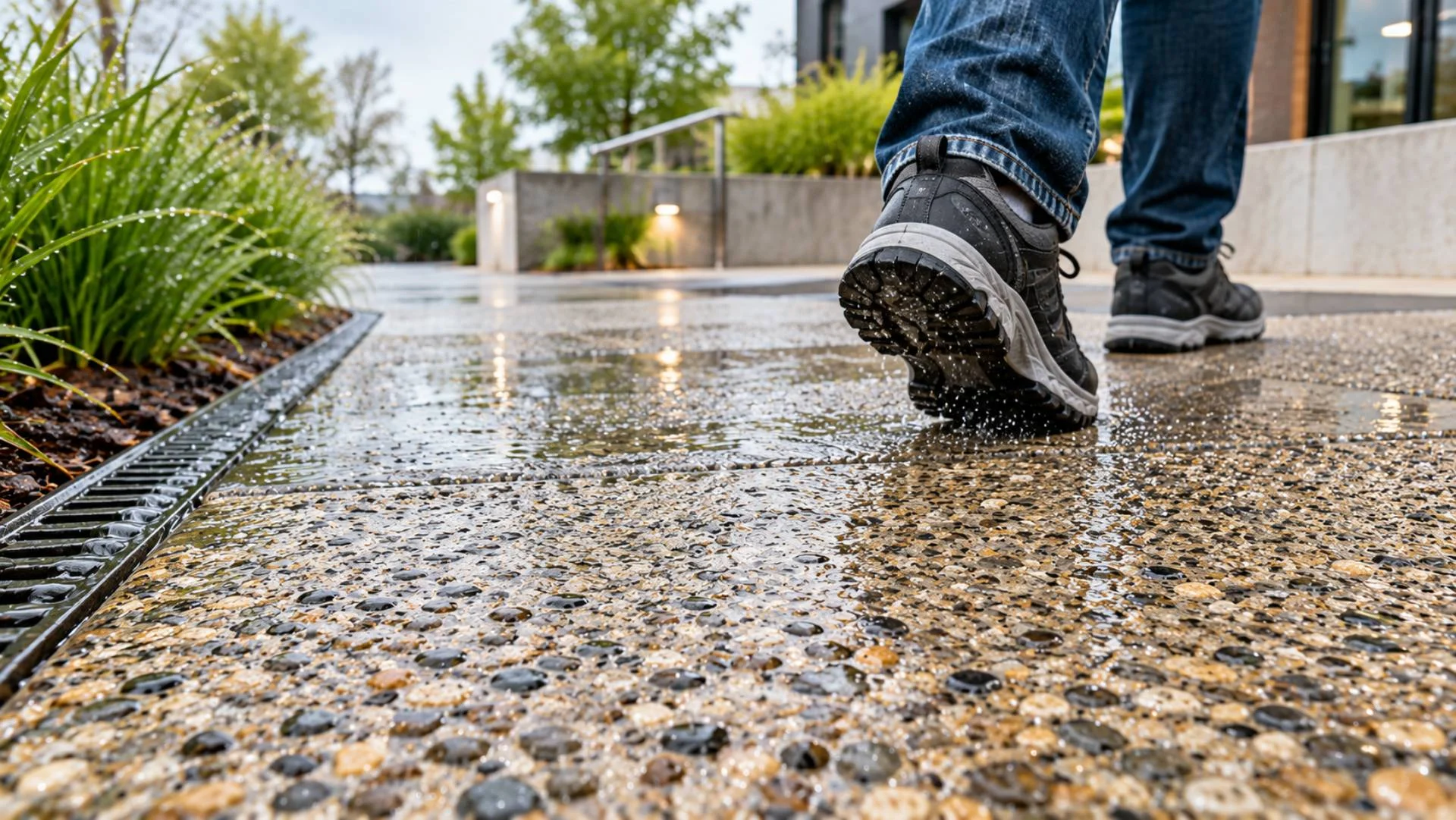
In Australia, slip resistance is measured, not guessed. Under AS 4586, new pedestrian surfaces are tested and rated. Pendulum results run from P0 (very slippery) to P5 (highest grip), and ramp results run from R9 to R13. Higher ratings, such as P4 and P5, are generally expected for wet outdoor areas like pool surrounds and external ramps.
Permeable concrete has two natural advantages here. It has a rough, open texture, and water drains straight through it instead of sitting on top. Together these make it one of the most slip-resistant concrete surfaces for wet outdoor areas, as long as it is kept clean and free of moss.
Why it grips so well
There is no water film. Most slips on outdoor surfaces happen when a thin layer of water sits between your shoe and a smooth surface, much like a tyre aquaplaning. On permeable concrete, rain drains down through the pores, so a film like that does not have a chance to form.
The texture is open and coarse. The surface is made of exposed stones bound by a thin layer of paste, with gaps between them. Your shoe makes contact with hundreds of small edges rather than one smooth plane.
It dries quickly. Because water drains away rather than evaporating slowly from the surface, the ground is back to dry sooner after rain.
How it compares with other outdoor finishes
| Surface | Grip in the wet | Standing water |
| Polished or honed concrete | Low | Sits on surface |
| Steel-trowelled plain concrete | Low to moderate | Sits on surface |
| Broom-finished plain concrete | Good | Runs off via slope |
| Exposed aggregate concrete | Very good | Runs off via slope |
| Permeable concrete | Very good to excellent | Drains through |
Exposed aggregate is the closest alternative for grip, and it offers more decorative options. Our article on the slip resistance of exposed aggregate finishes compares how the two textures perform.
What can make it slippery?
A permeable surface only stays grippy if its pores and texture stay open. Watch out for these:
- Moss and algae. In shaded, damp spots, organic growth can coat the surface with a slimy film. This is the most common cause of slips on any outdoor concrete.
- Clogging. Once the pores fill with silt, water stops draining and can sit on the surface again. Learn the early signs of a clogging surface so you can act before it becomes a hazard.
- Loose stones. Where the surface has ravelled, loose stones can roll underfoot like marbles. Sweep them away and repair worn patches.
- Sealers. A glossy film-forming sealer smooths over the texture and blocks the pores. Permeable concrete should not be sealed this way.
Moss and silt both come off with regular cleaning. The maintenance post includes moss and algae treatment tips that remove growth without leaving a slippery residue.
Where it works best for safety
Pool surrounds. It drains splashes instantly and gives excellent grip. The trade-off is that the coarse texture can feel rough on bare feet, so many pool owners choose it for paths leading to the pool and a smoother finish for lounging areas.
Paths and walkways. It is ideal where puddles and wet patches would otherwise form, particularly on shaded sides of the house.
Driveways and ramps. It works on flat and gently sloping driveways. On steep grades, see our article on permeable surfaces on steep driveways for design limits and alternatives.
Public and commercial areas. It suits car parks, footpaths and outdoor seating areas, where slips are both a safety and a liability concern.
Do you need a tested rating?
For a home driveway or garden path, a formal rating is rarely needed. For commercial projects, public spaces, aged care and pool areas covered by design requirements, a specified slip resistance class may be part of the plans.
Slip resistance depends on the mix, the finishing method and the condition of the surface. If your project needs a particular rating, discuss it before ordering. Ask for test results that match the product you are actually receiving, and allow for retesting once the surface is installed if required.
Frequently asked questions
Is permeable concrete slippery when wet?
No. Water drains through rather than forming a film on top, and the coarse texture gives strong grip. Moss and silt buildup are the main things that reduce it.
Is permeable concrete good around a pool?
Yes, for grip and drainage. It can feel rough on bare feet, so consider how the area will be used.
Does permeable concrete get slippery in winter?
It stays grippy in rain, but shaded areas can grow moss through the cooler months. Regular cleaning keeps it safe.
What slip rating does permeable concrete achieve?
It depends on the specific mix and finish. If a rating is required for your project, request test results for the product you are ordering.